
Last Updated: October 5, 2026
Does HHO help pass emissions? At HHOKitsDirect, we build DIY hydrogen-on-demand kits, so we see both the real gains and the exaggerated claims.

An HHO generator is an on-demand electrolysis device that splits distilled water into hydrogen and oxygen gas, often called oxy-hydrogen or Browns gas, and feeds that gas into the engine's air intake. The gas supplements the normal air-fuel mixture rather than replacing gasoline.
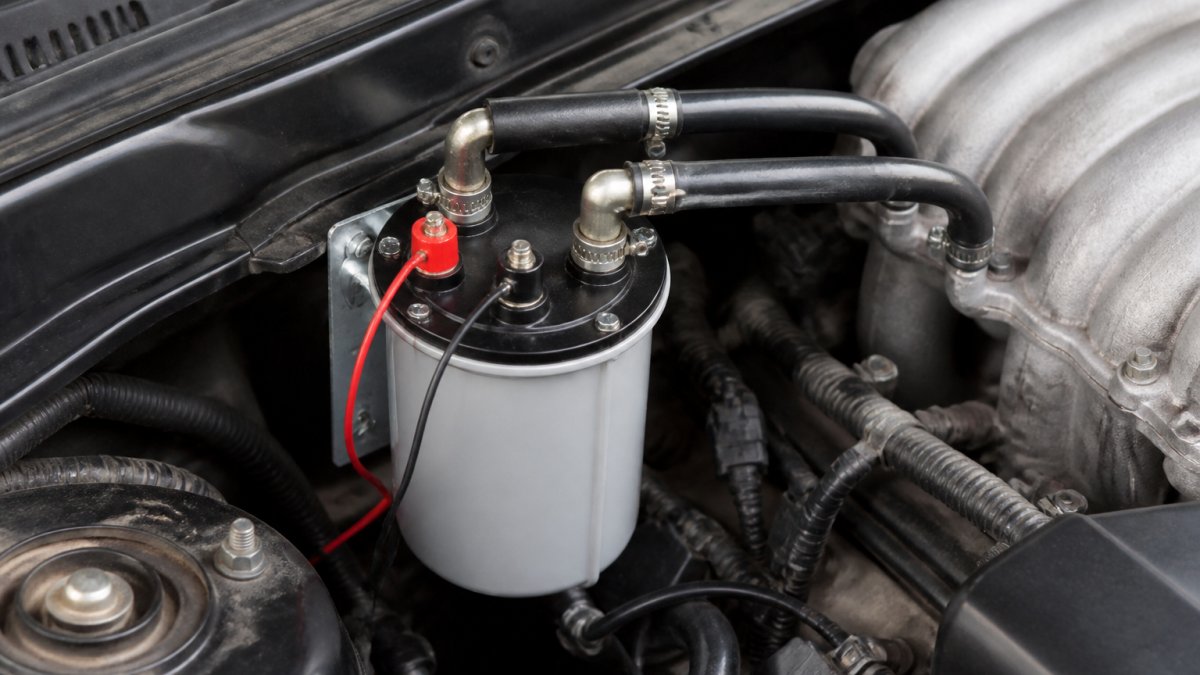
A wet cell generator passes current through water between stainless plates, releasing hydrogen and oxygen. Because the gas is produced only while the engine runs, nothing is stored under pressure. The sealed container design and internal plate retainers on our H2XTRME generators exist for one reason: to keep the electrolyte where it belongs and out of your engine.
In dual fuel mode, hydrogen supplementation joins gasoline in the combustion chamber. Hydrogen burns faster than gasoline, which shortens the burn event and can raise thermal efficiency slightly. The catch is that "slightly" is doing a lot of work in that sentence, and we will come back to it.
Hydrogen supplementation tends to lower hydrocarbon emissions and carbon monoxide because the added hydrogen helps burn fuel more completely. It does not reliably reduce nitrogen oxides. In fact, higher combustion temperatures can raise NOx, which is why engine timing and exhaust gas recirculation behavior matter so much.
That distinction matters for tailpipe testing. A vehicle can post cleaner CO and HC numbers while still failing on NOx, and the driver walks away confused.
If you want to know how to lower carbon emissions with an HHO kit, treat it as one part of a tune-up, not a standalone fix. The systems that produce measurable results share three traits:
Hydrogen burns hot and clean, and many drivers report that it gradually loosens carbon deposits on valves and inside the intake manifold. We treat that as a supporting benefit, not a guarantee. Carbon buildup is a real cause of rough idle and failed hydrocarbon readings, so anything that reduces it helps.
Vehicle emissions testing requirements vary by state, and the differences decide whether an HHO kit helps or hurts you. There is no single national test. The EPA vehicle emissions testing overview explains how these programs are structured.
The three test types you will encounter, and what each one actually does:
Tailpipe testing (dynamometer or idle). A probe in the exhaust measures CO, HC, and NOx while the vehicle runs at idle or on a dyno under load. This is the only test where HHO chemistry can directly change your numbers. Hydrogen supplementation tends to lower CO and HC because it helps burn fuel more completely. NOx is the wild card: higher combustion temperatures can raise it, so a vehicle can post cleaner CO and HC and still fail on NOx.
OBD-II scan. The inspector plugs into the diagnostic port and reads readiness monitors and stored codes. There is no tailpipe sample. HHO has no effect on this test. What fails you is a stored code or an incomplete monitor.
Visual inspection. The inspector confirms the catalytic converter, EGR valve, oxygen sensors, and other emissions hardware are present and unmodified.
This is the part most drivers overlook. Your ECU runs a series of self-tests called readiness monitors: catalyst, oxygen sensor, oxygen sensor heater, EGR, EVAP, misfire, and fuel system. Each monitor needs specific driving conditions to complete.
When you clear a check engine light or disconnect the battery, every monitor resets to "not ready." Most states allow one or two incomplete monitors on a 2001-and-newer vehicle, but some allow zero.
A common pattern is a driver who installs an HHO kit, sees a check engine light from a lean condition, clears the code, and drives straight to the test station. The monitors are not ready, and the vehicle fails on readiness, not on emissions.
| Test Type | What It Checks | HHO Impact |
|---|---|---|
| Tailpipe (dyno or idle) | CO, HC, NOx at the pipe | Can lower CO and HC; NOx is unpredictable |
| OBD-II scan | Readiness monitors, stored codes | No effect; codes and incomplete monitors still fail you |
| Visual inspection | Catalytic converter, EGR, sensors present | Unmodified emissions hardware required |
If your state runs OBD-II only, an HHO kit cannot help you pass. Your path is fixing codes and completing monitors. If your state runs a tailpipe test, HHO can shift CO and HC in your favor, but you need to address NOx and sensor behavior first. Check your state's program before you spend money on hardware that the test station will never measure.
Here is the part most HHO guides skip. Your engine's computer runs a closed-loop fuel strategy. The upstream oxygen sensor measures oxygen in the exhaust and reports a voltage to the ECU. The ECU compares that reading to its target and adjusts injector pulse width to hold a stoichiometric air-fuel ratio, which for gasoline is about 14.7 to 1 by mass.
Add hydrogen to the intake and the chemistry in the exhaust changes. Hydrogen burns faster and hotter, and it consumes oxygen differently than gasoline. The upstream sensor reads the shift, the ECU interprets it as a mixture error, and it reacts by adding fuel.
EFIE/ MAF PRO SERIES TUNERS for HHO kits - BACKORDERED (Out of Stock) →
The upstream oxygen sensor is a narrowband sensor on most vehicles built before roughly 2005. It does not report a precise air-fuel ratio. It switches rapidly between about 0.1 and 0.9 volts, crossing 0.45 volts at stoichiometry. The ECU counts the switches and trims fuel to keep the average near the midpoint.
Wideband sensors, common on newer vehicles, report a linear voltage that maps to a specific lambda value. They give the ECU a more precise picture, which means they correct faster and more aggressively. Either way, the ECU is doing its job. The problem is that it has no way to know hydrogen is in the mix.
The fix is signal correction. An EFIE, or Electronic Fuel Injection Enhancer, adjusts the voltage the oxygen sensor reports to the ECU. It does not change the actual exhaust chemistry.

For most fuel-injected gasoline vehicles, that means the EFIE/MAF ADVANCED GAS TUNER for HHO kits at $175, which covers up to four narrowband O2 sensors plus a MAF or MAP connection.
Diesel owners need a different path.
For drivers who want full control over timing and mixture, the EFIE/MAF PRO SERIES tuner at $275 adds a thermostat activation cycle, quad EFIE, and intake air and coolant temperature enhancers.
Three things go wrong when drivers skip sensor tuning:
Lean codes and check engine lights. Adding hydrogen without correction pushes the mixture lean. The ECU sets a P0171 or P0174 code. That light alone fails an emissions test in most states before the tailpipe is sampled.
Rich correction and higher CO. The ECU overcorrects in the other direction, adding fuel. CO and HC readings climb. You have made your tailpipe numbers worse, not better.
Catalyst damage over time. A persistent rich condition overheats the catalytic converter and shortens its life. Replacing a converter costs far more than a tuner.
Fuel economy gains from hydrogen supplementation are real but modest, and they depend far more on your driving and your tuning than on the generator itself. Some customers report larger long-term gains once sensor tuning is dialed in, and our Mileage Results Chart shows the spread honestly.
On engine reliability, a properly installed system does not harm the engine. Hydrogen is a supplemental fuel, not a fuel additive, and it leaves no residue. What does cause problems is a poorly sealed cell leaking electrolyte into the intake, which is why we chemically weld and permanently seal our containers and use internal plate retainers instead of gaskets.
Is HHO worth it for passing emissions? For a maintained vehicle with a clean sensor setup, yes, it can tip a borderline result in your favor while cutting fuel costs. For a vehicle with stored codes or a dead converter, fix those first.
If you want to lower carbon emissions and clean carbon out of your engine, start with a kit that is built to last. HHOKitsDirect offers 5th generation H2XTRME generator technology with a limited lifetime warranty, simplified installation using just two electrical terminals and two hose connections, and the sensor tuners that make the whole system work. Read more here to understand this technology and find the kit that matches your engine.
The amount varies by engine size and condition. Most HHO generator kits produce between 1 and 3 liters per minute of oxy-hydrogen gas, which is a small fraction of total intake air volume. This is enough to act as a combustion catalyst and improve how completely fuel burns, but it is not a replacement fuel source. Larger engines or those with heavy carbon buildup may need higher output or additional tuning to see measurable emission reductions.
Yes, and this is where many installations run into trouble. Adding HHO gas changes the oxygen content in the exhaust, which your O2 sensors read. Without an EFIE or MAF tuner to adjust those sensor signals, the ECU may see a lean condition, add fuel, and trigger a check engine light. An OBD-II scanner or Scan Gauge is needed to monitor fuel trims and confirm readiness monitors are set before heading to an emissions test.
Older vehicles with carburetors or early fuel injection often respond well because they have fewer sensors and simpler emissions control systems. Carbon buildup on valves and in the combustion chamber is common on high-mileage engines, and HHO's cleaning effect can reduce hydrocarbon emissions over time. However, if the catalytic converter or EGR system is already failing, HHO alone will not fix those problems. Repair those components first, then use HHO as a supplement.
Federal law prohibits tampering with emissions control systems, and many states with emissions testing programs will fail a vehicle if the catalytic converter, EGR, or O2 sensors have been removed or altered. HHO generators that supplement combustion without disabling emissions equipment generally do not violate tampering rules, but adding a tuner that modifies sensor signals sits in a gray area. Check your state's inspection requirements before installing, and keep all factory emissions components intact.

Subscribe to our newsletter and always be the first to hear about what is happening.
© 2026 HHOKitsDirect.com
Designed by Out of the Sandbox. Powered by Shopify


Note and Disclaimer: Hydrogen or Hydroxy gas and hydrogen cells are experimental technologies, results vary depending on application success is not guaranteed.
Editorial Team
Author