
Last Updated: November 22, 2026
Quick Summary
An hho generator splits distilled water into hydrogen and oxygen and feeds that gas into the intake as a combustion catalyst, not a fuel replacement. On older diesels, size the kit to displacement and check alternator headroom first, since the parasitic load can erase combustion gains.
An HHO generator is an on-board electrolysis unit that splits distilled water into hydrogen and oxygen gas and feeds that gas into the intake, where it joins the diesel charge and changes how the fuel burns.
HHO kits of this type are built for trucks, RVs, and generators. Results depend on engine condition, tuning, and installation.
Two titanium plates sit in an electrolyte solution inside a sealed cell. Alternator current drives electrolysis, hydrogen and oxygen bubble off, and a hose carries the mix to the intake. No compressed gas tank, no refueling station.
What it is not is a fuel replacement. The diesel still does nearly all the work. The HHO gas acts as a combustion catalyst, and the value shows up in burn quality, not in gallons replaced.
Diesel compatibility comes down to three variables: engine displacement, whether the injection system is mechanical or electronically controlled, and how much gas flow the engine can actually use. Get any of those wrong and the kit underperforms or throws codes.
Displacement is the first filter. A 4-cylinder compact truck needs far less gas flow than a V8. Oversizing wastes alternator current; undersizing keeps hydrogen concentration too low to matter.
The second filter is electronics. Older mechanically controlled diesels need no tuner.
Size the generator to displacement, then confirm the electronics. Our medium H2XTRME kit covers engines from 3.8 to 6.7 liters with a 19-plate cell, and the large kit covers 6.8 to 12 liters with 25 plates. If you are shopping by engine size, you can see the medium-displacement H2XTRME kit or compare the large-engine HHO kit directly.
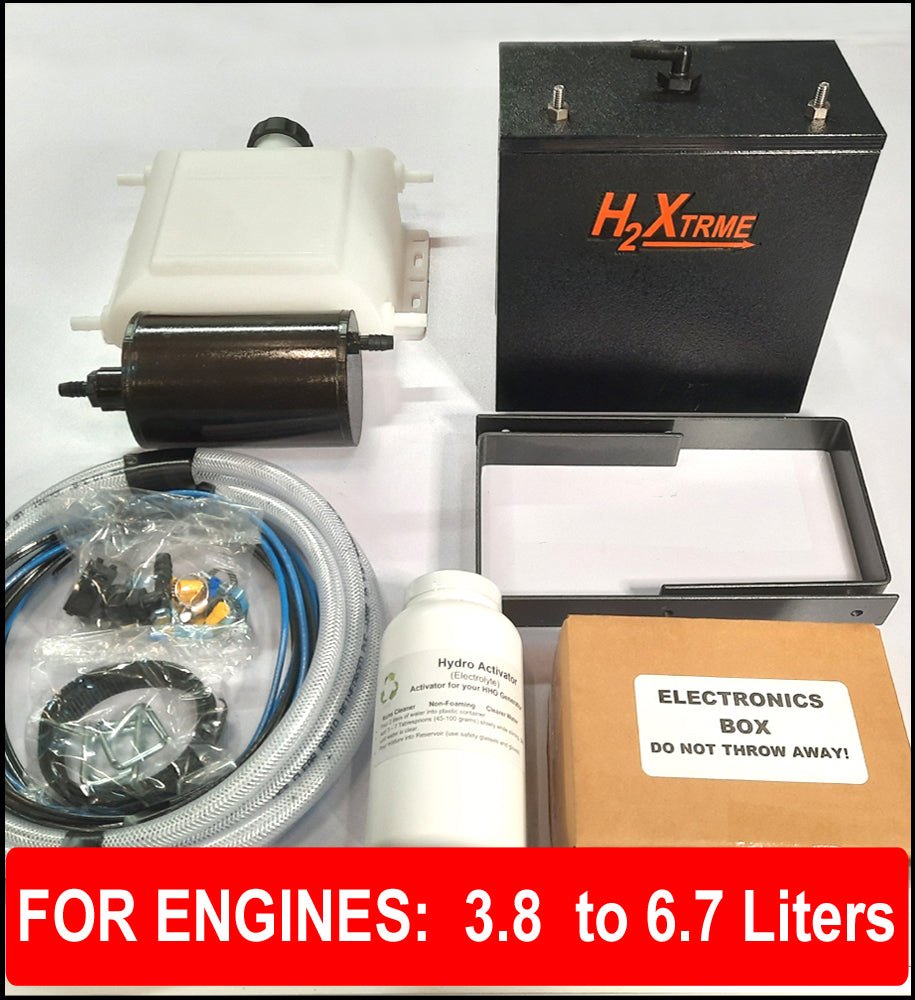
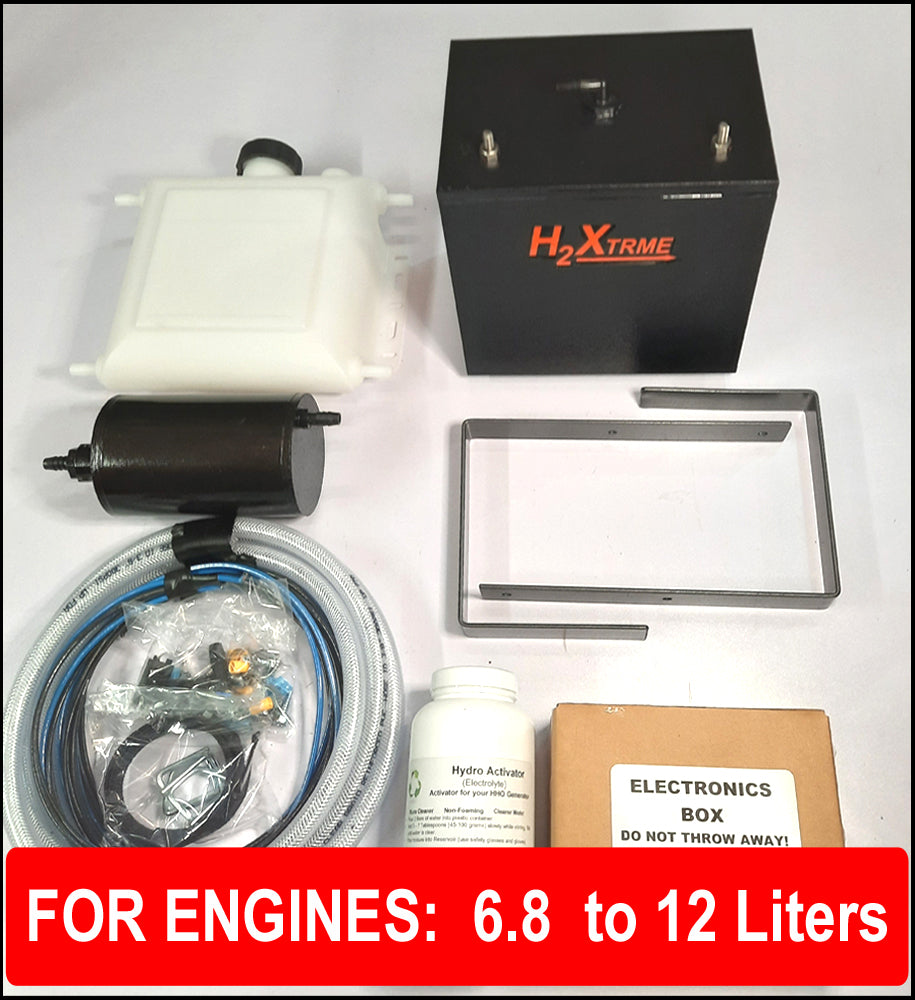
| Engine Size | Kit Option | Plate Count | Price | Best For |
|---|---|---|---|---|
| 3.8-6.7 L | H2XTRME Medium | 19 | $747 | Mid-size trucks, V6 and small V8 diesels |
| 6.8-12 L | H2XTRME Large | 25 | $897 | Heavy-duty pickups, large V8 diesels, RVs |
| Any electronic diesel | Diesel Tuner add-on | n/a | $175 | MAF/MAP, IAT, or CTS sensor adjustment |
Best for: daily-driven older diesels under 6.7 liters. Skip if: your engine is mechanically injected and already running clean.
H2XTRME Kit Prices by Engine Size
Fuel savings claims deserve scrutiny because the energy has to come from somewhere. The alternator makes the electricity, the engine turns the alternator, and that load costs horsepower and fuel.
Published claims range widely. Vendor claims of large fuel consumption reductions are not supported by the independent testing available, and results vary widely.
What most guides miss is the energy balance. If your alternator is already near capacity, adding a generator load can erase the combustion gains, so check alternator output before anything else.
Electrolysis is not free energy. Splitting water takes electrical work, and on a vehicle that work comes from the alternator, driven by the engine. The question is whether the combustion improvement exceeds the parasitic load of making the gas.
Confirm the alternator has headroom above existing loads before installing a kit.
Watch out: if your alternator is already near capacity, adding a generator load can erase the combustion gains. Measure alternator output at idle and at operating RPM with accessories on before you buy.
Controlled, independent tests of on-board HHO generators on older diesel engines are scarce, and results are mixed.
Treat large fuel-savings promises as unproven until you see a controlled test on your own engine.
For the full payback math, our breakdown of HHO generator cost versus fuel savings walks through the numbers honestly.
You cannot judge a kit without a baseline, and you cannot trust a seller's dyno sheet as a substitute for your own data. Use this sequence:
Tank-to-tank variation of 5% to 10% is normal on older diesels, so a single tank proves nothing. This process is the only way to separate a real combustion benefit from a hopeful reading of the fuel gauge.
Emissions claims are where the marketing gets loudest.
Independent work supports part of that story.
Engine cleaning is the claim we hear most from owners of high-mileage trucks.
Watch out: if your truck failed an emissions test, an HHO kit is not a repair. Fix the underlying fault first, then consider hydrogen as a combustion aid.
The gap between lab results and marketplace claims is where buyers get burned. A 1.6% to 2.5% thermal efficiency gain is worth having over a year of driving. A 30% fuel savings promise usually is not what the data shows.
Installation follows a fixed sequence. Mount the generator, plumb the gas line to the intake, wire two electrical terminals, fill the reservoir, and add activator.
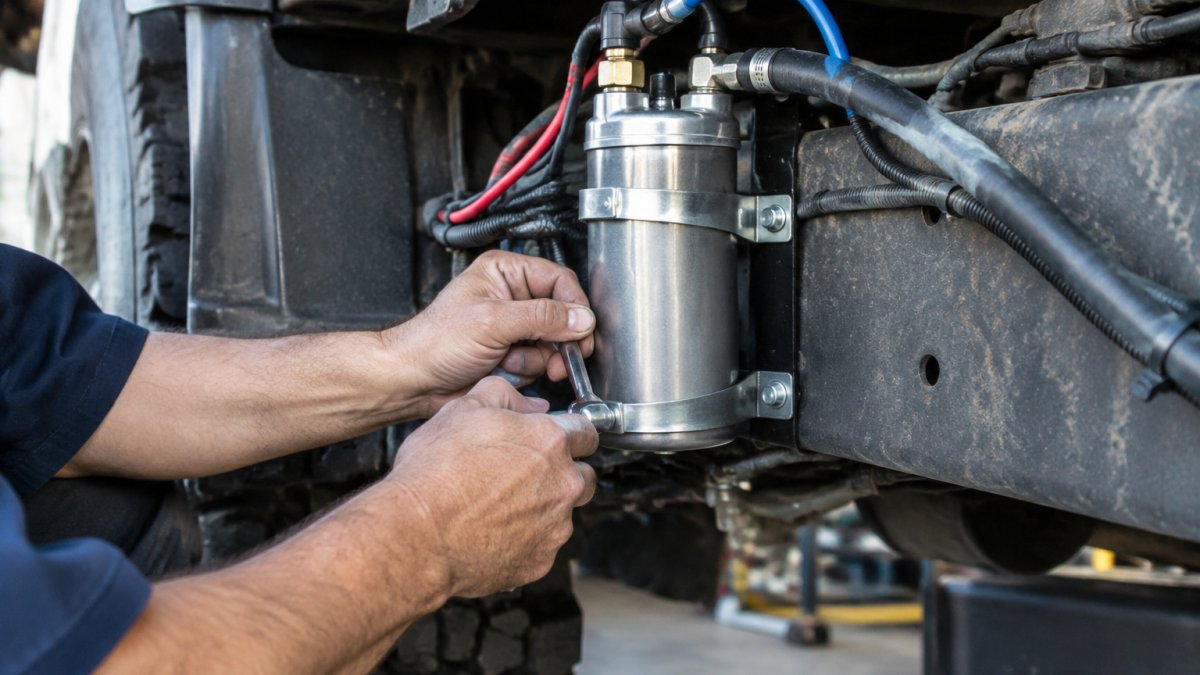
Mount the cell where it gets airflow and stays clear of exhaust heat. Route the hose with a gentle rise so condensation drains back rather than pooling in the intake.
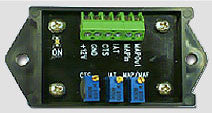
Electronically controlled diesels also need the sensor connections handled. The advanced diesel tuners for HHO include MAF/MAP, intake air temp, and coolant temp adjustment, and include a thermostat switch so the system only activates at operating temperature.
If you want the full sequence laid out, follow our step-by-step DIY HHO kit installation guide while you work.
Safety and warranty questions should come before the purchase. HHO gas is generated on demand and consumed immediately, safer than storing compressed hydrogen, but installation still carries real risks.
Older diesel engine bays present hazards gasoline cars do not. Hydrogen is flammable across a wide range in air and ignites easily, so keep gas contained, vented, and away from ignition sources.
Watch out: a backfire without a flame arrestor can ignite gas in the line and damage the cell or start a fire. Install the arrestor before the first start, not after.
An HHO system is a small chemical plant and needs periodic attention. The most common failure points are electrolyte condition, corrosion, leaks, and electrical faults.
Warranty coverage depends on the terms of your vehicle's warranty. Keep receipts and document the installation.
Emissions compliance is separate and varies by state. Tampering with emissions control devices is restricted, and some states with inspection programs may fail a vehicle for visible tampering. An HHO kit is not a repair for a failed emissions test, fix the underlying fault first, then consider hydrogen as a combustion aid.
The H2XTRME generator features a chemically welded, permanently sealed container with internal plate retainers that eliminate gaskets. It carries a Limited Lifetime warranty on the generator.
Before you buy anything, establish a baseline. Run three tanks of normal driving, record miles per gallon by hand at the pump, and note the conditions. Without that number, you cannot judge whether the kit helped.
Then match the kit to your displacement, confirm whether your diesel is mechanical or electronic, and check alternator headroom. Owners of high-mileage trucks often ask whether these systems suit older engines. Suitability depends on engine condition and correct electronics handling.
The real challenge is not finding an HHO kit; it is choosing one sized and configured for your specific engine so the gains are measurable.
Yes, with a caveat. A mechanically controlled diesel with no MAF, MAP, IAT, or coolant sensor has no fuel map for the HHO to interact with, so you run the kit without a tuner. Electronically controlled diesels need the diesel tuner to lean fuel flow and prevent error codes. Match the generator to displacement: a 3.8 to 6.7 liter engine takes a medium kit, and 6.8 to 12 liters takes a large one.
Claims range widely, and results vary by engine. Verify any improvement with a before-and-after MPG log on your own vehicle.
Hydrogen enrichment changes combustion, and cleaner combustion is the mechanism behind most carbon-cleaning claims. Cleaning claims should be read as unproven for any given kit until verified on your own engine.
The main risks are installation errors, water ingestion through a badly routed intake line, and electrical draw that strains an aging alternator. Route hoses so no liquid can reach the intake, and check alternator output before adding load. On warranty, a dealer can deny coverage for a failure they attribute to the modification, so keep receipts and document the install. HHOKitsDirect offers a Limited Lifetime warranty on its H2XTRME generators.

Subscribe to our newsletter and always be the first to hear about what is happening.
© 2026 HHOKitsDirect.com
Designed by Out of the Sandbox. Powered by Shopify


Note and Disclaimer: Hydrogen or Hydroxy gas and hydrogen cells are experimental technologies, results vary depending on application success is not guaranteed.

Editorial Team
Author