
Last Updated: November 24, 2026
Quick Summary
The five lower-cost alternatives to an expensive hydrogen injection system are an on-demand HHO generator kit sized to your engine, a DIY build from a proven manual, a PWM current controller added to an existing generator, a sensor tuner that corrects air/fuel ratio, and a combustion-catalyst additive routine paired with basic maintenance. Each option targets a different part of the cost stack, so the right pick depends on whether you are starting from zero or upgrading a kit you already own.
The five lower-cost alternatives to a full hydrogen injection system are: an on-demand HHO generator kit sized to your engine, a DIY build from a proven manual, a PWM current controller added to an existing generator, a sensor tuner that corrects air/fuel ratio, and a combustion-catalyst additive routine paired with basic maintenance. Each option targets a different part of the cost stack, so the right pick depends on whether you are starting from zero or upgrading a kit you already own.
A complete hydrogen injection system bundles a generator, reservoir, filter, wiring, and a control device. That is why splitting the purchase into stages works: you buy the catalyst hardware once, then add tuning only if your engine needs it.
Below, we break down where the money goes, what each alternative actually costs, and which one fits a daily commuter versus a 280,000-mile diesel truck.
A hydrogen injection kit uses electricity from your alternator to split distilled water into hydrogen and oxygen gas on demand. Nothing is stored under pressure. The gas travels through a reservoir and filter into the air intake, where it acts as a combustion catalyst that helps fuel burn more completely.
That on-demand design is also why cost varies so much between kits. The generator plates, the sealed container, and the plate count needed to match your engine displacement drive the base price. A small four-cylinder car needs far less plate surface than a 12-liter diesel.
Three cost drivers matter most:
If you want to see how those numbers stack up against fuel savings over time, our breakdown of HHO generator cost versus fuel savings walks through the real payback math.
HHO generator kit cost breaks into three tiers at HHOKitsDirect, and the tier is set by engine size, not by feature count.
| Kit | Engine Size | Price | Best For |
|---|---|---|---|
| H2XTRME 882 | 1.1L to 3.7L | $597.00 | 4-6 cylinder cars |
| H2XTRME 883 | 3.8L to 6.7L | $747.00 | Large 6 or 8 cylinder trucks |
| H2XTRME 884 | 6.8L to 12.0L | $897.00 | V8 trucks, RVs, big diesels |
Engine Size
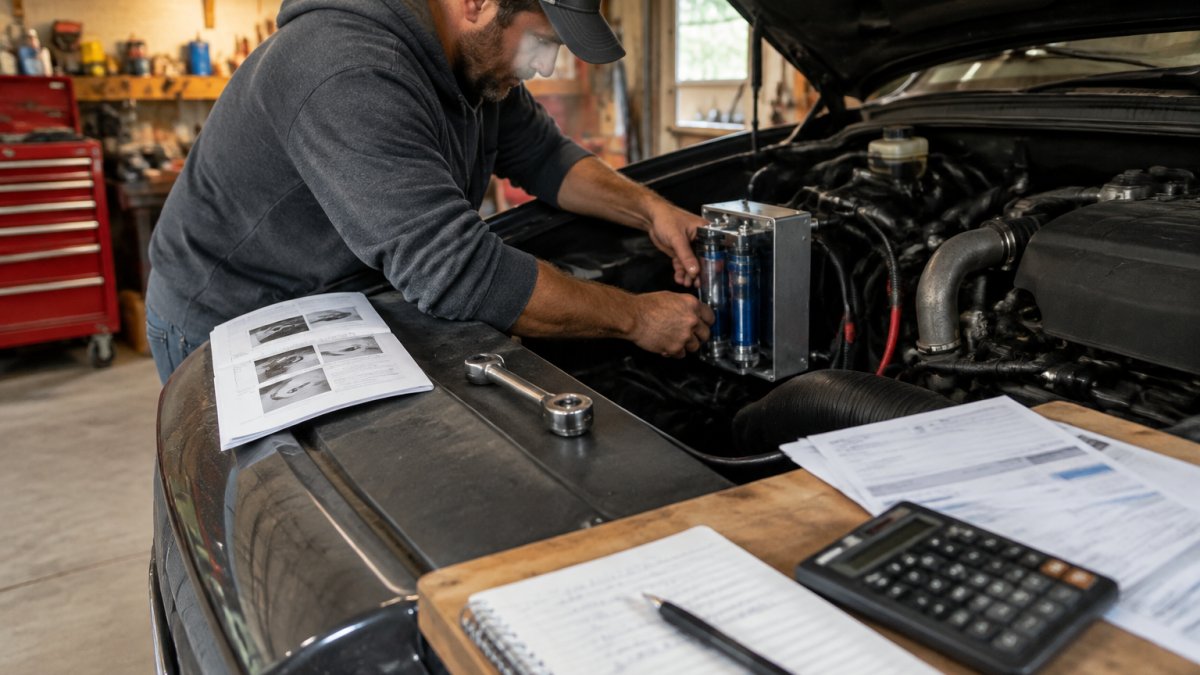
Every kit includes the generator, reservoir, filter, hose, wire, mounting brackets, and hardware. The 882 uses a 13-plate generator measuring 3.5 inches thick; the 883 steps up to 19 plates at 4.5 inches; the 884 runs 25 plates at 6 inches.
Optional add-ons are priced separately. A 40 AMP PWM controller runs $69.00, the EFIE/MAF Advanced Gas Tuner is $175.00, and the programmable Pro Series tuner is $240.00. A 55 AMP CCPWM controller costs $150.00.
Watch out: buying a tuner you do not need is the most common way to overspend. Carbureted engines take no tuner at all, and many 1987-and-newer gas vehicles run correctly with the standard gas tuner included in the kit option.
Once you have the full figure in hand, run your own numbers through our HHO kit fuel savings calculator to see how many miles it takes to break even.
Truck owners often ask whether a full kit is the only route. For a practical DIY guide to increasing truck MPG, see Increase Truck MPG: A DIY Guide to Better Fuel Economy. It is not.
1. Maintenance baseline (under $100). Correct tire pressure, a clean air filter, fresh spark plugs, and removing unnecessary weight cost almost nothing and compound with any hydrogen setup.
**2.
3. PWM current controller ($69.00-$150.00). If you already own a generator, a pulse-width-modulated controller dials current precisely instead of running brute-force power. The 40 AMP PWM controller runs $69.00; the 55 AMP CCPWM controller costs $150.00.
4. Sensor tuner ($175.00-$240.00). The EFIE/MAF Advanced Gas Tuner is $175.00 and the programmable Pro Series tuner is $240.00. A tuner corrects air/fuel ratio so the engine actually uses the cleaner burn.
5. Bare generator upgrade ($597.00-$897.00). If you already own a kit and only need more gas output, stepping up to a larger generator is cheaper than buying a second complete system.
What most guides miss is that these steps stack, and the order matters.
Watch out: none of these alternatives is a certified emissions fix. If you failed a test, repair the underlying fault before adding hardware, and check your warranty terms before installing aftermarket equipment.
Hydrogen direct injection and on-demand HHO are different technologies serving different purposes, and confusing them is where a lot of budget planning goes wrong.
Hydrogen direct injection delivers pressurized hydrogen straight into the combustion chamber of a hydrogen internal-combustion engine. It requires onboard hydrogen storage, high-pressure fuel delivery lines, and an engine control unit calibrated for hydrogen. That is OEM-level engineering, not a retrofit.
On-demand HHO systems generate hydrogen and oxygen from water as the engine runs, then feed the gas into the intake. There is no hydrogen storage, no high-pressure injector, and no separate fuel delivery system. The gas is used the moment it is made.
| Feature | Hydrogen Direct Injection | On-Demand HHO |
|---|---|---|
| Hydrogen storage | Required, high pressure | None |
| Injector hardware | Dedicated hydrogen injectors | None |
| Engine control | Full recalibration | Optional tuner |
| Retrofit to existing engine | Not practical | Designed for it |
| Typical cost | Vehicle-level engineering | Kit-level purchase |
For a driver comparing a fuel-cell electric vehicle or a battery-electric vehicle against a hydrogen engine, the honest answer is that those are powertrain decisions made at purchase. An HHO kit is a retrofit decision made in your garage. They are not competitors.
The U.S. Department of Energy's Hydrogen Shot water electrolysis technology assessment documents the current state of electrolyzer development across five technologies, which is useful background if you want to understand where hydrogen production is heading at scale.
Compatibility comes down to three questions: engine size, fuel type, and whether your vehicle has electronic controls.
The kit options are matched to the control system: carbureted, fuel-injected, and diesel engines each use a different tuner option. The kit option you choose depends on the control system:
On safety, the on-demand design removes the biggest risk factor in hydrogen: storage. Nothing is compressed or held. The generator produces gas only while the engine runs. That said, hydrogen is flammable, and any DIY retrofit should keep wiring fused, route hoses away from exhaust components, and follow the manual's torque and sealing specs.
Watch out: emissions compliance is where DIY retrofits get complicated. An HHO generator is not a replacement for a catalytic converter, and it is not a certified emissions control device. If you failed a test, fix the underlying fault first. Our comparison of HHO generators versus catalytic converters for emissions explains which problem each one actually solves.
Warranty is the other question worth asking before you buy. Adding aftermarket equipment can affect a vehicle warranty, so check your coverage terms and keep your installation documented.
Match the kit to displacement first, then decide on electronics. Browse our complete HHO kits organized by engine size and budget. That order prevents both overspending and undersizing.
Use this checklist before ordering:
For a 1.1L to 3.7L engine, the 882 at $597.00 is the fit. For 3.8L to 6.7L, step to the 883 at $747.00. If you are not ready to commit to hardware, the 8 Day Expert Course on Hydrogen and HHO Kits costs $9.97 and answers the "does this actually work" question before you spend more. For hands-on builders, the build-your-own HHO generator manual at $39.95 covers construction and installation from parts.
Best for: daily commuters and high-mileage drivers who want lower fuel cost without OEM-level engineering. Skip if: you expect a certified emissions fix or a replacement for battery-electric or fuel-cell technology.
Cutting fuel costs does not require the most expensive system on the market. It requires matching hardware to your engine and adding electronics only where they earn their keep. HHOKitsDirect builds 5th generation H2XTRME generators with chemically welded, permanently sealed containers, internal plate retainers that eliminate gaskets, and simplified installation using just two electrical terminals and two hose connections, all backed by a Limited Lifetime warranty on H2XTRME generators. Get started with HHOKitsDirect and find the kit sized to your engine.
Results vary by engine and tuning. Independent, peer-reviewed testing of retrofit HHO systems is limited, so treat any single number with caution. Your best evidence is a before-and-after fuel log over several tanks.
At HHOKitsDirect, the H2XTRME kits start at $597 for engines from 1.1 to 3.7 liters, $747 for 3.8 to 6.7 liters, and $897 for 6.8 to 12 liters. A 40 AMP PWM controller is $69, the EFIE/MAF advanced gas tuner is $175, and the programmable PRO SERIES tuner is $240. The build-your-own manual is $39.95 and the 8 Day Expert Course is $9.97. A complete hydrogen direct injection retrofit typically involves custom injectors, high-pressure storage, and control electronics, which is why many owners look at on-demand HHO first.
Hydrogen direct injection sprays pressurized hydrogen straight into the combustion chamber through a dedicated injector, timed by the engine control unit. It requires high-pressure hydrogen storage, reinforced fuel delivery lines, and injectors rated for hydrogen. That hardware is the main reason the cost climbs quickly. On-demand HHO systems take a different path: they generate hydrogen and oxygen from water as the engine runs and feed the gas into the air intake, so nothing is stored under pressure.
Pressurized hydrogen systems need high-pressure tanks, specialized injectors, and careful safety engineering, and the up-front cost can run into thousands of dollars. Retrofits may affect your vehicle warranty and can raise emissions compliance questions. On-demand HHO kits avoid stored hydrogen but still need correct tuning, regular water and electrolyte checks, and a tuner matched to your fuel system.
Basic maintenance is the cheapest first step: clean or replace air filters, fix a faulty oxygen sensor, keep tires at the right pressure, and address carbon buildup. Those fixes restore mileage you were already losing. An HHO generator kit adds a combustion catalyst on top of a healthy engine, so do the maintenance first and then measure. If you track mileage before and after each change, you will know which one actually moved the number.

Subscribe to our newsletter and always be the first to hear about what is happening.
© 2026 HHOKitsDirect.com
Designed by Out of the Sandbox. Powered by Shopify


Note and Disclaimer: Hydrogen or Hydroxy gas and hydrogen cells are experimental technologies, results vary depending on application success is not guaranteed.

Editorial Team
Author