
Last Updated: October 15, 2026
An HHO generator is an electrolytic device that splits distilled water into a hydrogen-oxygen mixture, then routes that gas into an engine's air intake to supplement combustion. At HHOKitsDirect, we build these systems for cars, trucks, RVs, and boats.
The HHO generator sits in the engine bay and draws current from the alternator. Inside the sealed container, stainless steel plates sit in distilled water mixed with an electrolyte.
Electrolysis uses electrical current to break water into its component gases. Two hydrogen atoms bond to one oxygen atom in a water molecule; current between submerged plates disrupts those bonds, releasing hydrogen at the cathode and oxygen at the anode.
Plate count and surface area determine output. A 13-plate electrolyzer suits engines from 1.1 to 3.7 liters, while a 25-plate unit serves larger displacement.

Hydrogen injection routes the generated gas into the engine intake stream, usually downstream of the air filter. The gas mixes with air before the throttle body, entering the combustion chamber alongside the fuel-air charge.
A one-way flow path and a bubbler or reservoir keep the mixture moving in the right direction and act as a safety buffer against backfire. The engine control unit never "sees" the hydrogen directly; it only responds to what the oxygen sensor reports about the exhaust.
Fuel-saving claims for HHO systems range from modest to extraordinary, and the gap comes down to one thing: how the electrical current is generated. Many drivers report mileage improvements, and the physics of hydrogen as a combustion catalyst is real, but no honest analysis skips the energy balance.
Hydrogen burns faster and more completely than gasoline alone, which can improve combustion efficiency and help clean carbon deposits over time. What it cannot do is create energy from nothing.
The alternator produces the electricity that feeds the electrolyzer, and the alternator runs on engine power. Every amp the HHO generator draws is an amp the engine must generate, a parasitic load.
If the generator draws 20 amps at 12 volts, that is 240 watts, or roughly one-third of a horsepower, continuously, and the engine burns extra fuel to make that electricity.
A second layer most sellers skip: electrolysis itself is not perfectly efficient.
Measuring real fuel economy requires discipline, not a single tank of gas. A common mistake is comparing one highway trip before installation to one after, with different weather, loads, and routes.
Use this method:
Hand calculation beats the dashboard readout, which can drift. For live data, a scan gauge reader pulls fuel trim and sensor values directly from the engine control unit.
A manufacturer's fuel-savings number is not a measurement; it is a marketing figure. To tell the two apart, ask three questions:
A practical middle path: run your own three-tank baseline, install the kit, run three more tanks, and log ambient temperature alongside each fill. If the gain survives that discipline, you have a real number for your vehicle.
The evidence for HHO systems is mixed, and anyone claiming otherwise is selling something. Independent, controlled testing with transparent methods is rare, and most published results come from installers or manufacturers with a stake in the outcome.
What we can say with confidence is narrower and more useful: hydrogen enrichment changes combustion, and combustion changes can improve efficiency, emissions, and carbon buildup.
Claims fall apart when they promise a fixed percentage for every vehicle.
Hydrogen's effect on engine power is subtle, not dramatic. Hydrogen burns faster than gasoline, which shortens the combustion event and can raise combustion efficiency.
Do not expect a large horsepower increase. The hydrogen volume from a typical HHO generator is small relative to the total intake charge, so it acts as a combustion catalyst rather than a primary fuel.
If a seller promises a specific power increase, ask for the test method. Dynamometer results vary with correction factors, ambient conditions, and whether the run was controlled.
NEW! H2XTRME HHO KIT - for SMALL size engines from 1.1 liters to 3.7 liters →
Safety is where cheap kits fail. The two real risks are backfire into the generator and sensor interference that throws the engine control unit into a fault state. A third, quieter risk is compliance: an add-on system can affect how your vehicle meets emissions requirements, with consequences at inspection time and in your warranty paperwork.
Backfire happens when combustion travels backward through the intake. A bubbler, check valve, or flash arrestor between the generator and the intake breaks that path; kits that skip these parts save money and create risk. The flash arrestor quenches a flame front before it reaches the hydrogen-oxygen mixture in the generator. A bubbler adds a water barrier and a visual check that gas is flowing.
On the electrical side, the generator draws current from a circuit that must be fused and switched properly, ideally only running when the engine is on. Standards most installers follow:
These are the same practices used for any aftermarket electrical accessory, and skipping them is the most common cause of failures owners report.
Sensor compatibility matters on any fuel-injected vehicle built after 1987. The oxygen sensor reads exhaust oxygen content, and added hydrogen shifts that reading. An EFIE, or Electronic Fuel Injection Enhancer, modifies the signal so the engine control unit does not over-correct and cancel out your gains. Diesels with electronic control need a dedicated diesel tuner for the same reason.
Adding a hydrogen-oxygen mixture to the intake changes what comes out of the tailpipe, and in states with tailpipe testing or onboard diagnostics checks, that can matter.
On the warranty side, the federal Magnuson-Moss Warranty Act limits how a manufacturer can void coverage for aftermarket parts, but it does not stop a dealer from denying a specific repair if the dealer can show the part caused the failure.
HHO generator installation begins with one decision: kit size. Undersize the generator and gas output is too low to matter; oversize it and you waste current on a load the engine did not need.
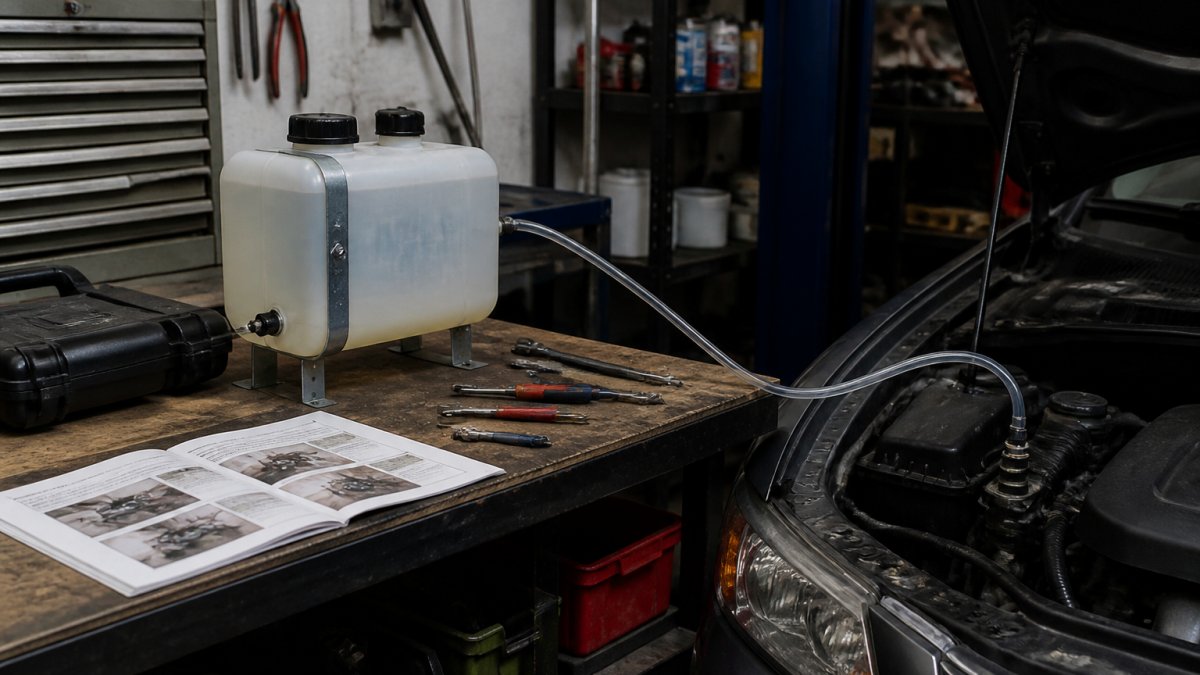
Match displacement to plate count. Small four-cylinder engines in the 1.1 to 3.7 liter range use a 13-plate unit. Medium engines from 3.8 to 6.7 liters use a 19-plate generator.

Tuner choice follows fuel system, not vehicle age. Carbureted engines with no electronics run without a tuner. Gas engines from 1987 onward with fuel injection use a gas tuner. All diesels with electronic control use a diesel tuner. Drivers chasing advanced results on fuel-injected gas engines can step up to a Pro Series tuner paired with a scan gauge reader for live feedback.
| Engine Type | Kit Size | Tuner Option |
|---|---|---|
| Carbureted, pre-1987 | 13 or 19 plate | None required |
| Gas, fuel-injected 1987+ | 13 or 19 plate | Gas tuner |
| Diesel, electronic control | 19 or 25 plate | Diesel tuner |
| Gas, advanced tuning | 19 plate | Pro Series tuner + scan gauge |
Payback math is simple once you know your baseline.
That math only works if you measure honestly, which is why the baseline log matters more than the marketing sheet.
Our 5th generation H2XTRME generators use chemically welded, permanently sealed containers with internal plate retainers that eliminate gaskets, cutting the leak points that plague older designs.
Reducing fuel costs on a high-mileage vehicle usually means choosing between expensive repairs and doing nothing.
It can change how combustion behaves, but the size of the effect depends on your engine and how the kit is tuned. Hydrogen added to the intake speeds up the flame front, which helps burn fuel more completely. Owners of older, carbon-fouled engines often notice smoother idle and easier starting. Expect measurable changes in combustion quality rather than a dramatic power jump, and measure your own baseline mileage before installing so you can compare real numbers.
Results vary by vehicle, driving pattern, and kit quality. The hydrogen-oxygen mixture is produced on demand from distilled water and an electrolyte using current from your alternator, so the alternator carries extra electrical load. Any fuel savings have to exceed that load to be a net gain. This is why controlled, before-and-after measurement matters more than a single tank of gas. Track at least three fill-ups under similar conditions before drawing conclusions.
A sealed container holds distilled water, an electrolyte, and stainless steel plates. Electrical current flows through the plates, splitting water into hydrogen and oxygen through electrolysis. The gas mixture travels through a filter and hose into the engine intake, where it mixes with incoming air. The engine control unit and oxygen sensor then adjust the air/fuel ratio. On fuel-injected vehicles, a tuner module modifies sensor signals so the ECU accounts for the added hydrogen.
Safety depends on installation quality. The main risks are hydrogen backfire into the generator and leaks at hose connections. A properly built kit uses a bubbler or flash arrestor to stop flame travel, sealed containers with Viton O-rings instead of gaskets, and fuses on the electrical supply. Mount the generator away from exhaust heat and secure all hoses with clamps. If you are not comfortable working with 12-volt wiring and fuel-adjacent components, have a shop do the install.
Hydrogen burns cleanly and does not leave carbon deposits, so the combustion side is not the concern. The bigger issue is sensor management. Adding hydrogen changes the oxygen content in exhaust, and an unmodified oxygen sensor may read this as a lean condition, causing the ECU to add fuel and cancel out any savings. A tuner like an EFIE adjusts the signal so the ECU stays balanced. Skip the tuner on a fuel-injected engine and you may run rich.
Match the kit to your engine displacement first. A generator sized for a 2.0-liter four-cylinder will not keep up with a 6.7-liter diesel. Confirm your engine type, since carbureted, fuel-injected gas, and electronic diesel engines each need different tuner options. Check whether the container uses welded construction and sealed fittings rather than gaskets that wear out. Finally, ask about the warranty terms and return policy before ordering, and confirm the kit includes the reservoir, filter, hose, and mounting hardware.
More complete combustion can reduce unburned hydrocarbons and carbon monoxide in exhaust, which is what emissions testing measures. Owners of high-mileage vehicles sometimes see improvement after the hydrogen helps burn off carbon deposits. That said, an HHO system will not fix a failed catalytic converter, a bad oxygen sensor, or a check-engine light. Repair the underlying fault first, then let the HHO system help keep combustion clean going forward.

Subscribe to our newsletter and always be the first to hear about what is happening.
© 2026 HHOKitsDirect.com
Designed by Out of the Sandbox. Powered by Shopify


Note and Disclaimer: Hydrogen or Hydroxy gas and hydrogen cells are experimental technologies, results vary depending on application success is not guaranteed.
Editorial Team
Author