
Last Updated: October 11, 2026
An HHO generator comparison reveals critical differences in technology, installation complexity, and real-world performance claims. HHO generator comparisons reveal critical differences in technology, installation complexity, and real-world performance claims. The gap between marketing promises and measurable results is wider than most buyers realize.
HHO generators work by using electrolysis to separate hydrogen and oxygen gases from water while your engine runs. These gases then enter the air intake and act as a combustion catalyst, theoretically improving fuel efficiency and reducing emissions. The concept sounds straightforward, but execution varies dramatically between manufacturers.
| Feature | HHOPlus Systems | Hydrox Systems | HHOKitsDirect H2XTRME |
|---|---|---|---|
| Generator Design | Standard plate configuration | Standard plate configuration | Chemically welded, patent-pending internal plate retainers |
| Installation Complexity | Moderate | Moderate | Simplified (2 electrical, 2 hose connections) |
| Tuner Options | Limited | Limited | Gas, Diesel, Pro Series available |
| Warranty | Standard | Standard | Lifetime on H2XTRME generator |
| Price Range | $600-$900 | $650-$950 | $597-$897 (size-dependent) |
| Engine Size Coverage | Small to large | Small to large | Small (1.1-3.7L) to Large (6.8-12L) |
The real question isn't which system looks best on a spec sheet, it's which one delivers measurable fuel savings without creating installation headaches or warranty complications.
HHOPlus has built a reputation in the HHO community, but owner feedback reveals consistent patterns worth understanding.
Hydrox Systems positions itself as a performance-focused option.
Installation difficulty is often the deciding factor between systems that perform similarly on paper. The actual process reveals why design philosophy matters.
A basic HHO kit installation follows this sequence: mount the generator in the engine bay, connect two hoses (one to the air intake, one to the reservoir return), run two electrical wires to the battery and ignition, and calibrate the tuner if your vehicle has fuel injection. This takes 3-8 hours depending on engine bay accessibility and your mechanical experience.
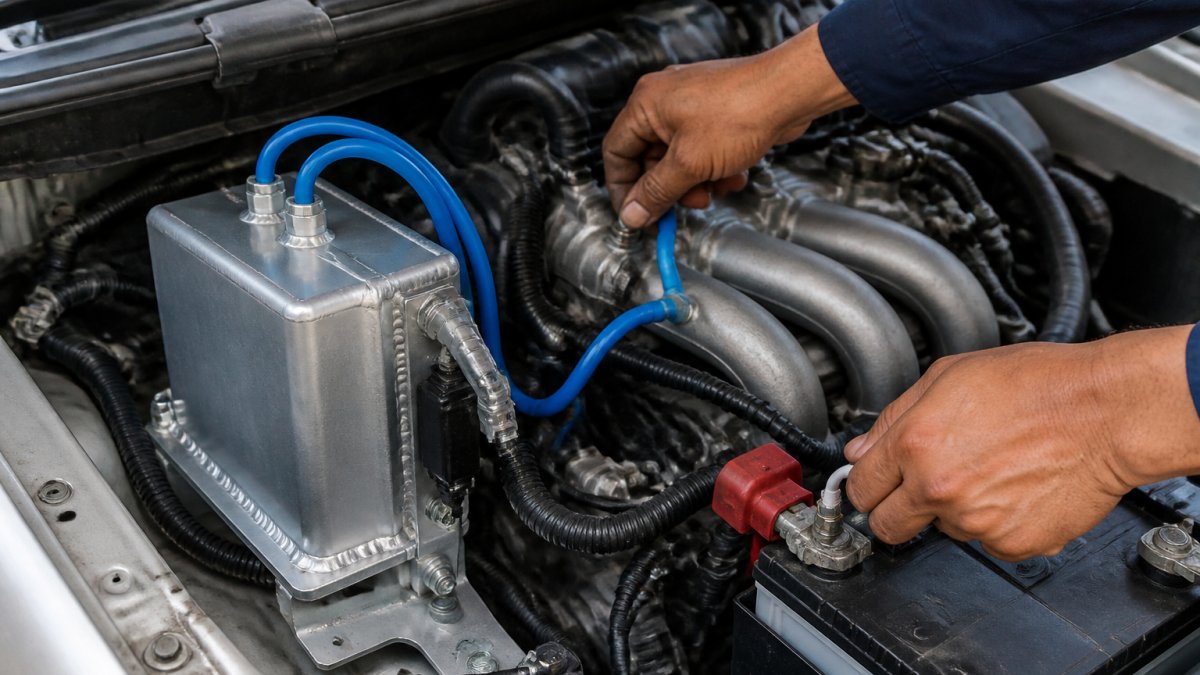
The critical difference between systems is complexity at each connection point. Standard designs require multiple hose connections and bolted reservoir mounts, which means more leak points and more adjustment needed during setup. Simplified designs like HHOKitsDirect's H2XTRME reduce this to two hose connections and two electrical terminals, simplifying installation.

Vehicle-specific compatibility is another layer. Older carbureted engines (pre-1987) need only basic air intake modification. Fuel-injected vehicles (1987 and newer) require a tuner module to communicate with the engine's computer, adding complexity but enabling better performance calibration. Diesel engines need a diesel-specific tuner that monitors fuel injection timing, making installation more technical.
Many installers underestimate the time required to route hoses cleanly through the engine bay without pinching or kinking them. Poor routing creates back-pressure, reduces gas production, and can damage hoses over time. Taking an extra hour to plan routing saves frustration later.
An HHO generator requires regular maintenance to prevent leaks, maintain gas production efficiency, and avoid warranty voidance through neglect.
Water quality is the first maintenance priority. Distilled water only, tap water contains minerals that corrode plates and clog filters. Most systems consume 1-2 gallons of distilled water per month in regular use, so budget accordingly.
The electrolyte (usually potassium hydroxide or sodium hydroxide) needs periodic replenishment. It doesn't deplete quickly, but it does degrade over time. Most manufacturers recommend checking electrolyte concentration every 2-3 months and replacing it annually.
Filter maintenance is overlooked by many owners but critical for longevity. The dryer filter captures water vapor and prevents it from entering your engine. A clogged filter reduces gas production and forces the system to work harder, consuming more electrical power. Replace the filter every 3-6 months depending on usage frequency.
Hose inspection should happen monthly. Look for cracks, discoloration, or signs of leakage at connection points. Hoses degrade from heat and UV exposure, and a failing hose can dump water into your engine if it ruptures.
Electrical connections corrode over time, especially in humid climates. Check battery terminal connections every 2-3 months and clean any corrosion with a wire brush. Corroded connections reduce power delivery and can cause the system to underperform or shut down unexpectedly.
This is where HHO generator marketing diverges most sharply from reality, and understanding the gap is essential before you invest.
Manufacturers claim 20-50% fuel economy improvements, but real-world results are often more modest and inconsistent. Owner-reported results cluster around 10-25% improvement in optimal conditions, such as highway driving at steady speeds with a well-tuned system. City driving, heavy traffic, and cold starts may show minimal or no improvement.
NEW! H2XTRME HHO KIT - for SMALL size engines from 1.1 liters to 3.7 liters →
The physics explain why. An HHO generator produces a small volume of hydrogen and oxygen gas relative to your engine's total air intake. On a V8 engine, this supplemental gas represents perhaps 5-10% of the combustion mixture. While the combustion catalyst effect is real, it's not dramatic enough to overcome inefficiencies in stop-and-go driving or heavy acceleration.
Fuel economy improvement depends heavily on driving behavior. Steady-speed highway driving maximizes the system's benefit. Aggressive acceleration, frequent braking, and idle time minimize it. A driver who changes habits (less aggressive throttle, more coasting) often sees more improvement from behavior change than from the HHO system itself.
Engine condition matters significantly. A well-maintained engine with fresh spark plugs and clean fuel injectors shows better results than an engine with carbon buildup or worn components. An older engine with 150,000+ miles may see more improvement if the HHO system helps clean carbon deposits, but this benefit is gradual and hard to quantify.
The tuner calibration directly affects results. An aggressive tuner setting produces more gas but consumes more electrical power, potentially offsetting fuel savings. A conservative setting saves electrical power but produces less hydrogen. The optimal setting is vehicle-specific, which is why some owners get 25% improvement while others see 10%.
The answer depends on three factors: your engine size, your technical comfort level, and what you actually expect from the system.
For small engines (1.1-3.7 liters): HHOKitsDirect's H2XTRME 882 kit at $597 is purpose-built for this range. The simplified two-connection design cuts installation time and failure points compared to HHOPlus or Hydrox Systems. If you value straightforward installation over advanced tuning options, this is the strongest choice.
For medium engines (3.8-6.7 liters): The H2XTRME 883 at $747 delivers the same design advantages at a slightly larger scale. Most trucks and SUVs fall into this range, and the medium kit balances power output with installation simplicity. Hydrox Systems and HHOPlus offer comparable coverage here.

For large engines (6.8-12 liters): The H2XTRME 884 at $897 handles trucks, large SUVs, and RVs. At this scale, system reliability becomes critical because a failed component in a vehicle you depend on creates real problems. The chemically welded design and internal plate retainers offer a durable solution.
For commercial or high-demand applications: HHOKitsDirect's Dual Quad Core commercial unit is engineered specifically for trucks, buses, and generators operating under continuous load. This is not a car kit in a box, it's a purpose-built system with dual generators, advanced cooling, and a smart controller. Contact HHOKitsDirect directly for pricing and specifications.
Installation complexity should influence your choice if you're not mechanically experienced. HHOKitsDirect's H2XTRME systems simplify connection points, which can be beneficial if you're installing this yourself.
Warranty coverage matters more than most buyers realize. A Limited Lifetime warranty on the H2XTRME generators protects you if internal components fail. Standard industry warranties typically cover only 1-2 years.
Real fuel economy expectations should temper your purchase decision. Budget for 10-20% improvement as realistic, not the 20-50% marketing claims. This means a vehicle getting 20 mpg might improve to 22-24 mpg, meaningful for high-mileage drivers, modest for occasional drivers. Calculate your annual fuel savings and compare that to the system cost to determine payback period.
Choosing the right HHO generator system comes down to matching your engine size, installation capability, and realistic expectations about fuel savings. HHOKitsDirect's H2XTRME technology stands apart because it eliminates gaskets, reduces connection points, and simplifies installation, which translates to fewer leak problems and lower maintenance burden over time. The lifetime warranty on H2XTRME generators gives you long-term protection that standard warranties don't provide. For technical specifications on hydrogen fuel systems and emissions reduction data, consult official resources. Independent testing of alternative fuel technologies provides peer-reviewed research on HHO system performance. Get started with HHOKitsDirect and select the H2XTRME kit sized for your engine to reduce fuel consumption, lower emissions, and extend engine life with proven hydrogen injection technology.
Both HHOPlus and Hydrox Systems manufacture HHO generators that use electrolysis to produce hydrogen and oxygen gases for engine injection. Real-world performance varies by vehicle type, engine size, and driving conditions. Your choice depends on engine displacement, fuel type (gasoline or diesel), and compatibility with your vehicle's fuel injection or carburetor system.
HHO kit manufacturers typically claim 20-50% fuel consumption reductions, but results vary widely. Actual mileage improvements depend on engine condition, vehicle weight, driving habits, and air-fuel mixture tuning. Older vehicles with carbon buildup may see better results than newer, cleaner engines. Diesel engines in commercial applications have shown documented improvements, such as the 45% mileage increase seen in a bus with a EURO 5 engine during a demo with 8 witnesses and fleet owners son. Real-world gains typically fall between 10-30% for properly tuned systems on compatible vehicles.
HHO generator installation ranges from straightforward to moderately complex depending on your vehicle and kit design. Most kits, including HHOKitsDirect's H2XTRME series, require only two electrical connections and two hose connections to the air intake, making basic installation accessible to handy owners. For advanced results with gas fuel injection, a Pro Series Tuner requires a Scan Gauge reader or similar. Older carbureted vehicles are simpler to install than fuel-injected models.
HHO kit maintenance centers on water quality and filter replacement. You'll need to refill distilled water regularly, consumption varies by driving patterns and climate. The internal filter typically needs replacement every 3-6 months, depending on water purity and driving hours. Check hose connections monthly for leaks, and inspect the generator cell for mineral buildup if using tap water. Some systems include float sensors that alert when water levels drop. Proper maintenance prevents corrosion, maintains hydrogen production efficiency, and extends the generator's lifespan. HHOKitsDirect offers a Limited Lifetime warranty on H2XTRME generators.
HHO generators produce cleaner-burning hydrogen and oxygen gases that can reduce emissions by improving combustion efficiency. Vehicles with carbon-clogged engines or running rich may see measurable emissions reductions after HHO installation. However, emissions test results depend on your vehicle's baseline condition, the specific pollutants being tested (NOx, particulates, hydrocarbons), and proper system tuning.

Subscribe to our newsletter and always be the first to hear about what is happening.
© 2026 HHOKitsDirect.com
Designed by Out of the Sandbox. Powered by Shopify


Note and Disclaimer: Hydrogen or Hydroxy gas and hydrogen cells are experimental technologies, results vary depending on application success is not guaranteed.
Editorial Team
Author