
Last Updated: September 20, 2026
A DIY hydrogen fuel system kit is a bolt-on electrolysis unit that splits distilled water into HHO gas and feeds it into your engine's air intake as a combustion catalyst. HHOKitsDirect sells two H2XTRME kits: the 882 for engines from 1.1 to 3.7 liters at $597, and the 883 for engines from 3.8 to 6.7 liters at $747. Both arrive complete with the generator, reservoir, filter, hose, wire, mounting brackets, and hardware.
The 882 is a 13-plate generator, 3.5 inches thick, 8 inches wide by 7.75 inches high. The 883 steps up to 19 plates at 4.5 inches thick, same footprint. Both use a chemically welded, permanently sealed container with internal plate retainers that eliminate gaskets.
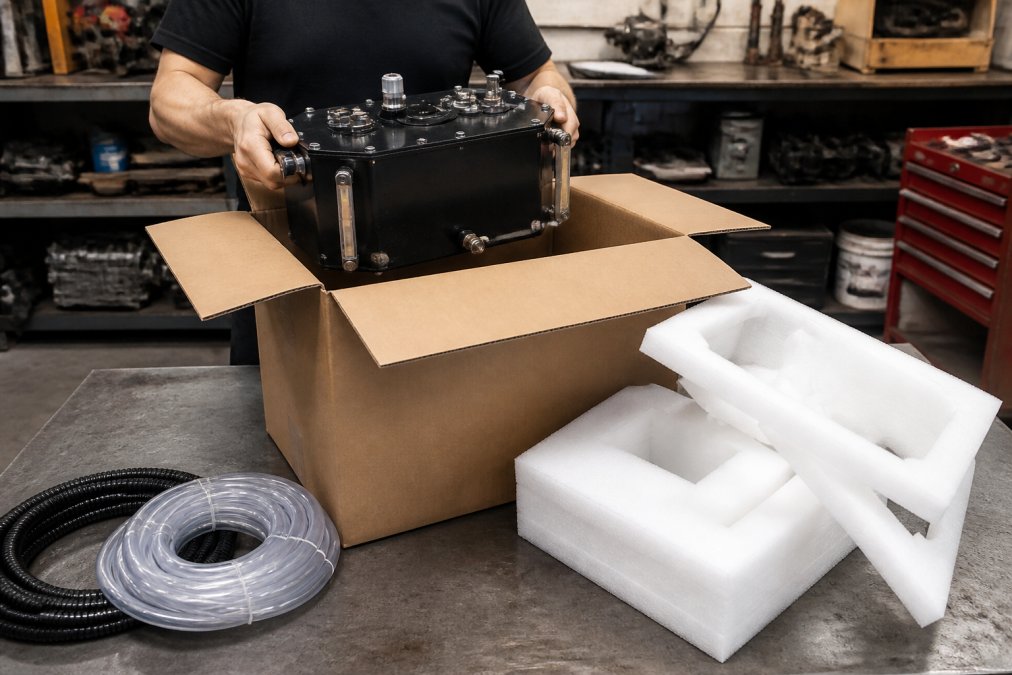
Engine displacement decides your kit. The 882 covers 1.1 to 3.7 liters, most four-cylinder cars and small trucks. The 883 covers 3.8 to 6.7 liters, large six-cylinder and eight-cylinder engines.
| Kit | Engine Range | Plates | Price | Best For |
|---|---|---|---|---|
| H2XTRME 882 | 1.1L - 3.7L | 13 | $597 | Four-cylinder cars, small trucks |
| H2XTRME 883 | 3.8L - 6.7L | 19 | $747 | Large six-cylinder, V8 trucks |
Both kits ship in five tuner configurations: No Tuner for carbureted vehicles, Gas Tuner for fuel-injected gas engines from 1987 onward, Diesel Tuner for electronically controlled diesels, Pro Series Tuner for advanced gas results with a scan gauge reader, and a Bare Generator option for upgrading an existing unit. Most buyers need the Gas Tuner.
The difference comes down to sealing. Most hydrogen generator designs rely on stacked plates bolted together with gaskets between each layer, and every gasket is a future coolant or gas leak. H2XTRME welds the container closed and seals the two terminal bolts with Viton O-rings and military-grade sealing nuts. Internal plate retainers hold the plates without gaskets at all.
That design removes the most common failure point in older generator designs and cuts installation to two electrical terminals and two hose connections, since every other internal connection is welded at the factory.
Electrolysis runs electrical current through water between submerged plates to split it into hydrogen and oxygen gas. The plates act as electrodes, and distilled water with activator serves as the electrolyte. Current density and voltage regulation determine gas output per minute.
This is an on-demand system, not a storage tank. Gas production scales with engine load, and nothing accumulates when the engine is off, unlike a pressurized hydrogen fuel cell stack, which stores energy rather than producing gas continuously.
Installation runs about two hours with basic hand tools. The kit includes a fully illustrated manual, and the work is limited: mount the generator, run two hoses, connect two electrical terminals, add water and activator, then start the engine.
The most common mistake is tapping an unswitched power source, which lets the unit run with the engine off.
Most DIY hydrogen fuel system kit content stops at installation.
Electrolysis consumes water and activator and deposits mineral residue on the plates. Even with distilled water, the activator leaves a conductive film that thickens with every hour of operation. Left alone, that film raises resistance and drops gas output.
Hydrogen injection is a combustion catalyst, not a fuel replacement.
Never clean plates with tap water, vinegar, or abrasive pads. Vinegar etches the plate surface and permanently reduces gas output. Abrasives strip the catalytic coating some plate designs use. Distilled water and a soft nylon brush only.
Distilled water, activator concentrate, O-rings, and sealing nuts are consumables. Realistic annual maintenance is under $50 in consumables.
HHO gas is flammable. Here are some safety and legal considerations.
The system produces HHO on demand rather than storing it. Gas can accumulate if the generator is mounted in a sealed compartment, and a loose hose can vent HHO into the engine bay.
Safety rules:
Federal frameworks that may apply to engine modifications include:
The Clean Air Act prohibits tampering with or defeating emissions control devices (Tampering and Aftermarket Defeat Devices). Adding a device that alters the air-fuel mixture or exhaust oxygen reading can, depending on tuning, be construed as tampering. The Environmental Protection Agency (EPA) enforces this.
Emissions inspection rules vary by state:
EPA vehicle emissions and aftermarket parts guidance
A kit that improves combustion efficiency can help a vehicle that failed an emissions test, but it is not a guaranteed fix, and no manufacturer should tell you otherwise. If your vehicle is due for inspection, install and tune the system, drive at least two full tanks to let the ECU adapt, then test. Do not install the day before an inspection.
The Magnuson-Moss Warranty Act governs how aftermarket modifications affect a factory warranty. A manufacturer cannot void your entire warranty just because you installed an aftermarket part, it must show the part caused the specific failure claimed.
Most personal auto policies require disclosure of modifications affecting vehicle value, performance, or safety, and an HHO generator is performance-adjacent. Whether your policy requires disclosure depends on the carrier and state regulations.
Before you install: check your state's emissions inspection rules, read your warranty booklet's modification clause, and call your insurer.
Fuel economy gains vary by vehicle, driving conditions, and tuning. HHOKitsDirect publishes a mileage results chart from real customers. The amount you save depends on your engine, commute, and tuning.
Whether a DIY hydrogen fuel system kit pays for itself depends on your annual fuel spend and mileage. Carbon cleanup plus reduced maintenance add value.
You can build a DIY hydrogen fuel system kit that uses electrolysis to produce HHO gas on demand, but it is not a fuel cell. A fuel cell uses a proton exchange membrane to create electricity from hydrogen. An HHO generator uses electricity from your alternator to split water into hydrogen and oxygen gas, which feeds into the engine intake to improve combustion efficiency. HHOKitsDirect offers both a $39.95 build manual and complete H2XTRME kits starting at $597.
An HHO generator kit produces hydrogen and oxygen gas through electrolysis. That gas enters the combustion chamber and acts as a combustion catalyst, helping fuel burn more completely. Better combustion means less unburned fuel exits through the exhaust, which can improve fuel economy. The H2XTRME system also helps clean carbon deposits from older engines, which restores some lost efficiency over time.
HHO gas is flammable, so proper installation matters. The H2XTRME generator uses a chemically welded, permanently sealed container with Viton O-rings and military-grade sealing nuts to prevent leaks. Install the generator away from exhaust heat, use a flash arrestor in the hose line, and check all connections for leaks before driving. Follow the included fully illustrated manual and never bypass the reservoir or filter components.
Federal law does not prohibit HHO generator installation, but some states have emissions inspection rules that may affect your vehicle. An HHO system that improves combustion and reduces emissions may actually help you pass an emissions test. Check your state's inspection requirements before installing. Also notify your insurance company about any aftermarket modification, since some policies require disclosure of engine changes.
The H2XTRME 882 kit for engines from 1.1 to 3.7 liters costs $597. The H2XTRME 883 kit for engines from 3.8 to 6.7 liters costs $747. Both come with the generator, reservoir, filter, hose, wire, mounting brackets, and hardware. If you prefer to source your own parts, the build manual is $39.95 and covers electrolysis basics and installation. The kits include a limited lifetime warranty on the generator.
The challenge with any fuel-saving modification is separating measured results from marketing claims. HHOKitsDirect addresses that directly with a published mileage results chart, a sealed generator design that removes the gasket failures common to older kits, and a Limited Lifetime warranty on the H2XTRME generators. If you want verified fuel economy gains rather than promises, start with the kit that matches your engine displacement and log your own before-and-after numbers.

Subscribe to our newsletter and always be the first to hear about what is happening.
© 2026 HHOKitsDirect.com
Designed by Out of the Sandbox. Powered by Shopify


Note and Disclaimer: Hydrogen or Hydroxy gas and hydrogen cells are experimental technologies, results vary depending on application success is not guaranteed.
Editorial Team
Author