
Last Updated: November 9, 2026
Quick Summary
HHO kits for backup generators are electrolysis systems that feed hydrogen and oxygen into the engine's air intake as a combustion catalyst, while the engine still runs on diesel or gasoline. Match the kit to engine displacement and confirm your charging output can carry the electrical load before buying.
HHO kits for backup generators are electrolysis systems that feed hydrogen and oxygen gas into the engine's air intake to act as a combustion catalyst. At HHOKitsDirect, we build these systems around 5th generation H2XTRME generator technology for cars, trucks, RVs, and boats. Before you buy, understand what the hardware does and what it cannot do.
The core idea is simple. Electricity from the engine's charging system passes through water, splitting it into hydrogen and oxygen. That gas mix, called oxyhydrogen, enters the combustion chamber and speeds up the burn. The engine still runs on diesel or gasoline. The HHO generator is an add-on, not a fuel replacement.
Electrolysis is the process of using electric current to decompose water into hydrogen and oxygen gas (Hydrogen Production: Electrolysis). Oxyhydrogen is the combined H2 and O2 gas that electrolysis produces, and it burns far faster than liquid fuel alone.
A dry cell design stacks titanium plates inside a sealed container with electrolyte solution between them. The plates stay submerged while the gas collects above. Our H2XTRME units use a chemically welded, permanently sealed container with internal plate retainers that eliminate gaskets.
Peer-reviewed results on HHO fuel savings are thinner than the marketing suggests. An experimental study of a wet-cell HHO generator describes the device and its water-decomposition mechanism but does not report a measurable fuel-saving outcome. A separate HHO generator study indexed by IJERT frames its research question around emissions reduction without publishing a measured finding in the available summary.
That gap matters. Treat any efficiency number as a starting hypothesis to verify on your own generator, not a guarantee.
Here is the tension most guides skip. Splitting water consumes electricity, and that electricity comes from the engine's alternator, which is driven by the same fuel you are trying to save. If the gas produced does not improve combustion enough to offset the alternator load, net fuel use can rise.
Engine displacement is the deciding spec, but on a stationary generator it is only the first of four checks. A kit sized for a 2-liter car engine will not produce enough gas for a 10-liter diesel genset, and an oversized kit wastes electrical load. Work through these four steps in order before you buy anything.
Step 1: Identify the engine, not just the generator. Backup generators are driven by one of three engine families, and each behaves differently with an HHO add-on:
Step 2: Match displacement to kit size. Our sizing breaks down cleanly:
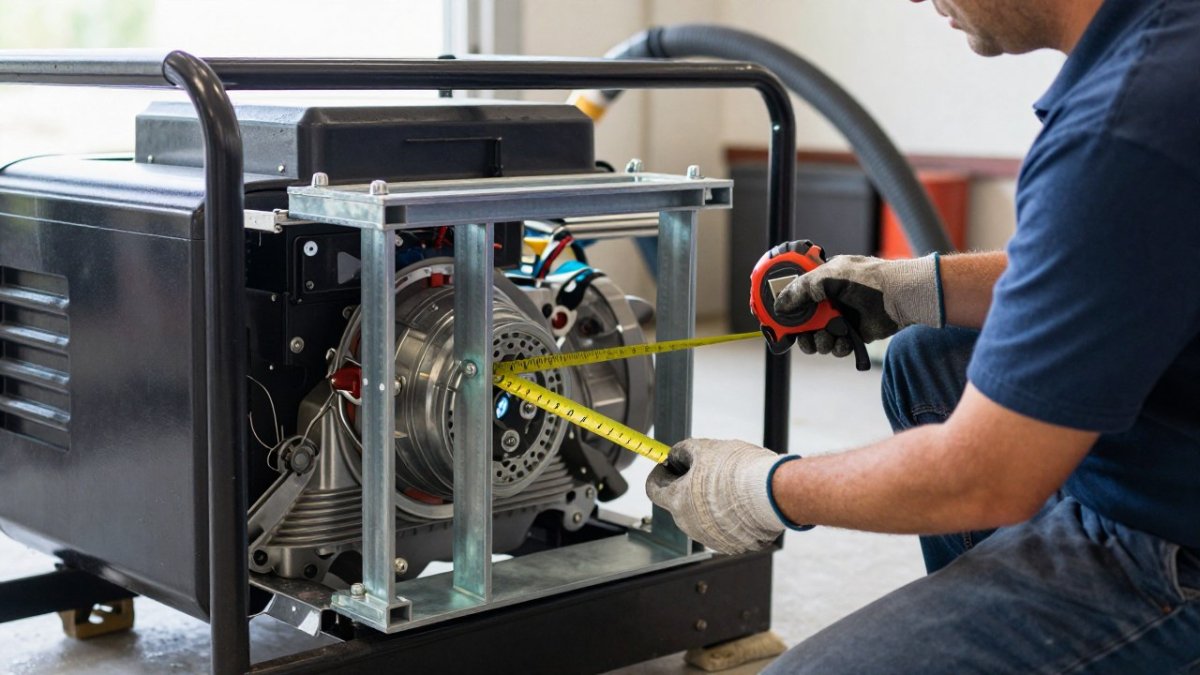
Step 3: Confirm the charging output can carry the load. Add up the kit's electrical draw, the existing control and battery-charging load, and a margin for cold starts, and compare the total against the alternator's continuous rating.


Step 4: Check the manufacturer's guidance before you cut anything. Get written confirmation that an HHO add-on will not affect your warranty or emissions compliance before you mount a cell.
Step 5: Size for operating load, not nameplate rating. A 20 kW genset running at 40 percent load produces different intake airflow and exhaust temperature than the same unit at 90 percent load. Log your actual load profile for a week, then size the kit to the displacement of the engine at the load you actually run.
Expect to pay between $597 and $897 for a standard H2XTRME kit, with commercial systems quoted on request.
| Kit | Engine Range | Price |
|---|---|---|
| H2XTRME Small | 1.1L to 3.7L | $597 |
| H2XTRME Medium | 3.8L to 6.7L | $747 |
| H2XTRME Large | 6.8L to 12L | $897 |
| DUAL QUAD CORE Commercial | Diesel gensets, buses, trucks | Contact for pricing |
Before committing, run the math on runtime hours and fuel cost. Our payback period calculator guide walks through the ROI formula so you can see how many operating hours a kit needs before it pays for itself on your generator.
H2XTRME kit prices by engine size
Our kits ship with generator, reservoir, filter, hose, wire, mounting brackets, and hardware, and installation needs only two electrical terminals and two hose connections. If you want to see the full process first, our step-by-step installation guide covers mounting, wiring, and first startup.
Fleet operators running both trucks and stationary gensets get the most from a shared parts and service routine.
For continuous-duty equipment, check electrolyte level and filter condition on a fixed schedule, and log fuel use before and after install so you have your own data. Our commercial DUAL QUAD CORE unit includes a float sensor for low water, a thermostatically controlled cooling fan, and four levels of filtration. Tracking fuel use alongside maintenance also helps clarify whether an HHO setup or a solar-powered backup approach better fits your operating needs, a comparison Holy Prepper can help you consider.
Hydrogen is flammable across a wide range in air, and any add-on that produces it on demand near a stationary engine deserves a hard look. This section covers what the product listings leave out: the physical hazards, the code questions, the warranty exposure, and the commissioning and maintenance routine that keeps a stationary system safe over years of standby duty.
Mount the cell and reservoir in a ventilated area, route the gas line away from ignition sources, and never enclose the system in a sealed cabinet. A bubbler and a flashback arrestor are not accessories; they are the two components that stop a flame from traveling back into the cell. Confirm both are present and rated for the line size before you install.
A backup generator is wired into a transfer switch and a building electrical system. Any add-on that draws from the starting battery or charging circuit must be fused, protected from vibration, and isolated so it cannot backfeed the transfer switch or drain the battery during an outage. Use stranded, oil-resistant wire, route it away from exhaust and moving parts, and terminate with ring connectors rather than twist joints. If you are not comfortable working around a transfer switch, have a licensed electrician make the final connections.
What matters is whether the installation keeps the generator in compliance with the emissions and safety requirements it was sold under. Check with your generator manufacturer and your local authority having jurisdiction before installing anything on the intake or fuel system, and keep the manufacturer's written response on file.
Installing an HHO system on a generator that is still under a manufacturer's warranty can void coverage on related components. Get written confirmation first, and ask specifically whether the intake modification, the electrical tap, and the gas injection point are covered. Our H2XTRME generators carry a Limited Lifetime warranty on the H2XTRME generator.
A standby generator may sit idle for months and then run for days. That duty cycle changes the maintenance routine:
Sizing an HHO kit for backup generators comes down to three numbers: engine displacement, charging output, and runtime hours. Get those right and the rest of the decision is straightforward.
HHOKitsDirect builds sealed, gasket-free H2XTRME generators with a Limited Lifetime warranty, simplified two-terminal installation, and commercial systems engineered for diesel gensets and heavy equipment. Tell us your generator's engine size and duty cycle, and we will match you to the right kit.
Send us your generator's displacement and model, and our team will confirm which H2XTRME or DUAL QUAD CORE system fits. Get started with HHOKitsDirect and spec a system built for your equipment, not a car kit in a box.
The published research does not support a firm number. Treat any specific percentage you see advertised as unverified until you see it reproduced on a stationary generator under load. The honest position is that HHO kits are a combustion catalyst add-on, not a fuel replacement, and results vary by engine, load profile, and tuning.
For a stationary generator you are usually sizing above the passenger-car range. HHOKitsDirect lists its large-engine H2XTRME kit for 6.8 to 12.0 liter engines at $897, the medium kit for 3.8 to 6.7 liters at $747, and the small kit for 1.1 to 3.7 liters at $597. The DUAL QUAD CORE commercial unit, which the company says has been tested on large backup generators and diesel gensets, is quoted on request.
You can, and plenty of people do. A sealed factory unit with welded construction and internal plate retainers eliminates gaskets. If your generator is a critical backup asset, weigh the savings against the risk of an untested build failing during an outage.
Check your generator's warranty terms before installing anything on the intake, since aftermarket modifications can void coverage.

Subscribe to our newsletter and always be the first to hear about what is happening.
© 2026 HHOKitsDirect.com
Designed by Out of the Sandbox. Powered by Shopify


Note and Disclaimer: Hydrogen or Hydroxy gas and hydrogen cells are experimental technologies, results vary depending on application success is not guaranteed.

Editorial Team
Author