
Last Updated: November 12, 2026
Quick Summary
Advanced performance modification kits are packaged sets of matched components that change how an engine breathes, burns fuel, or manages heat, and each kit type targets a different part of that chain. Bolt-on kits install without opening the engine, while full internals like pistons, rods, and cams change the engine's mechanical limits. Confirm engine code, sensor architecture, and existing modifications before ordering any kit.
Advanced engine performance modification kits change how an engine breathes, burns fuel, and manages heat, and each kit type targets a different part of that chain.
A performance modification kit is a packaged set of components designed to alter an engine's airflow, fuel delivery, or internal geometry in a coordinated way. A kit differs from buying parts individually because the components are matched to work together.
Bolt-on kits install without opening the engine: intake systems, exhaust components, catch cans, and electronic tuners. They are generally reversible and leave the long block sealed.
Full engine internals go deeper: pistons, rods, bearings, camshafts, and valvetrain. These require engine removal or top-end disassembly and change the engine's mechanical limits, not just its airflow.
If you are still mapping out the broader upgrade path, our guide on how to improve engine performance covers the full sequence of bolt-ons, tuning, and maintenance before you commit to internal work.
A performance engine rebuild kit supplies the wear parts needed to restore and upgrade an engine in one purchase. Most kits are assembled around a specific engine platform, so contents vary, but the core is consistent.
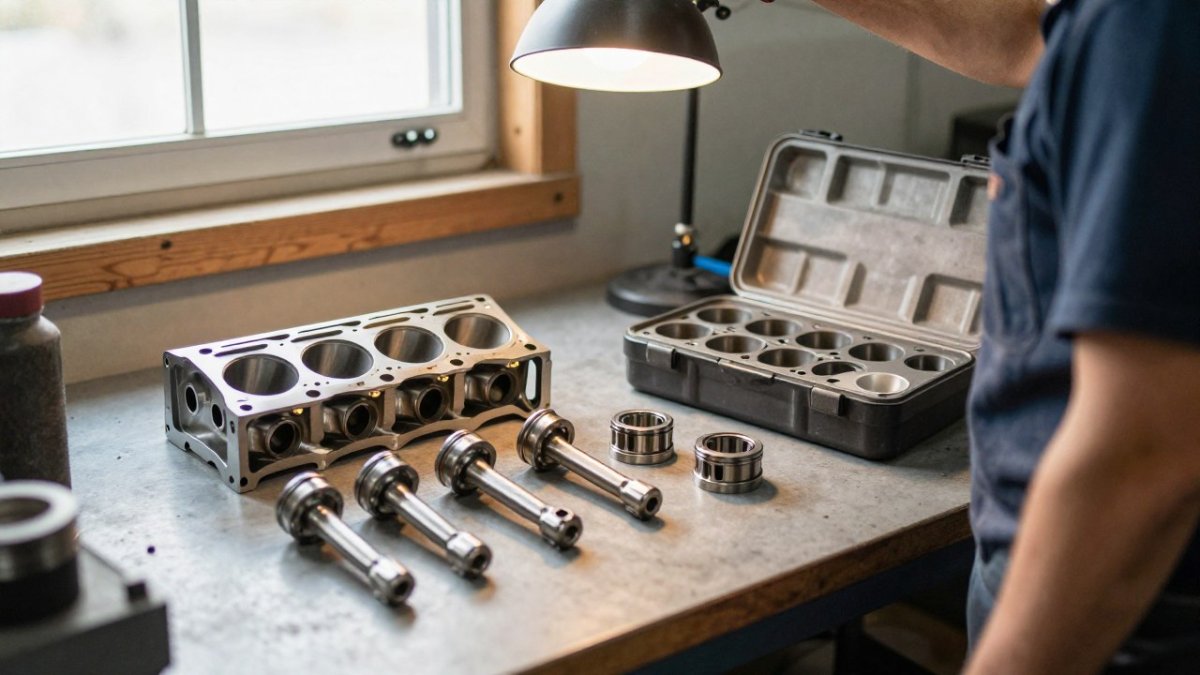
Pistons set compression ratio and must match your cylinder head chamber volume and fuel octane. Forged pistons tolerate more cylinder pressure than cast, which matters once you add boost or a bigger cam.
Connecting rods carry combustion load to the crankshaft; bearings set oil clearance.
A rebuild kit is only as good as the machine work behind it. Cylinder honing, deck surfacing, and crankshaft inspection are separate costs and separate decisions.
Engine modifications for more power follow one rule: air in, air out, and the valvetrain that controls the timing between them.
Camshafts set when valves open, how far, and for how long.
Valve springs, retainers, and valves must handle the lift and rpm the cam demands.
If you are pairing cams and intake work with electronic tuning, our rundown of the best engine tuning tools explains what each tool actually adjusts.
An intake manifold controls charge air path and runner length; an exhaust system controls how fast burned gases leave. Both only help if the ECU tuner can add the fuel and timing the extra airflow needs.
An ECU tuner rewrites fuel and ignition tables; without tuning, bolt-ons often produce a lean condition or trigger a check engine light.
Buy a staged kit for a different engine and fitment becomes your problem, most stalled builds stall here, not on the install.
Before you order any kit, confirm four things, in this order:
Component compatibility is where most projects stall. Intake manifolds, headers, and tuners are designed around specific engine configurations, and the failure modes are predictable:
Watch out: a kit that lists a displacement range but not an engine code range is a red flag. Ask the seller for the specific engine codes and model years the kit was validated against, and get the answer in writing before you pay.
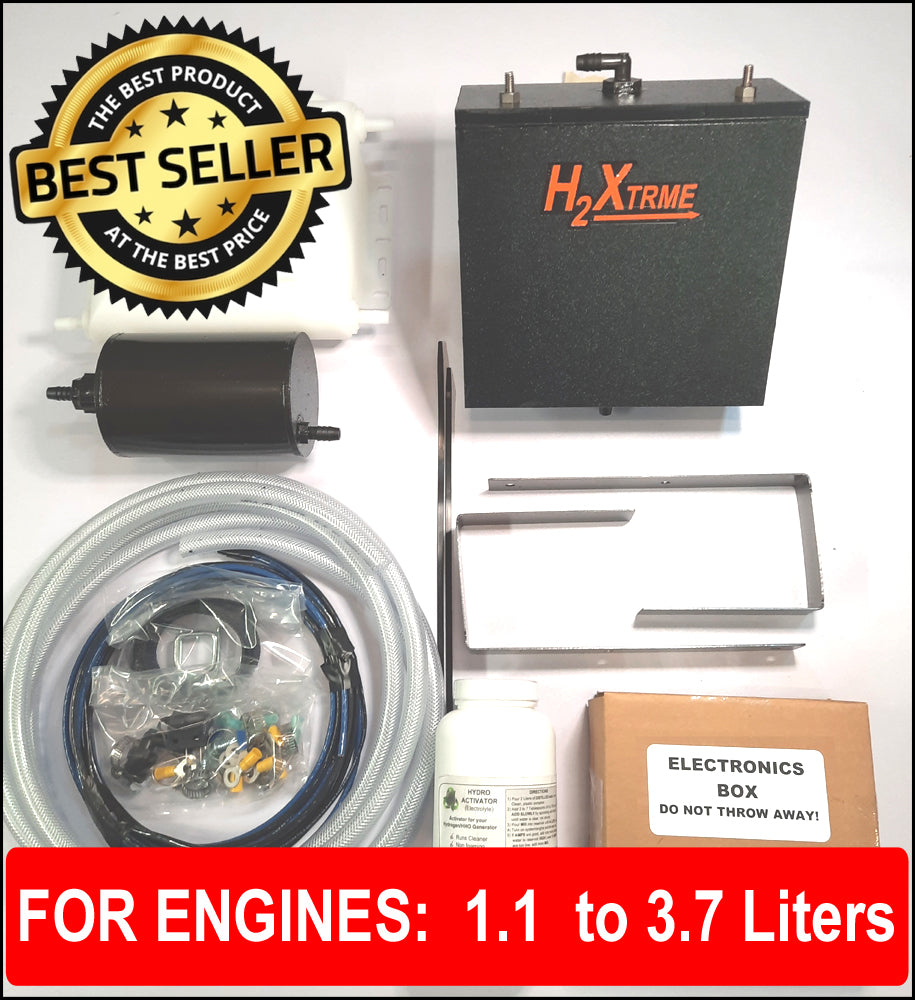
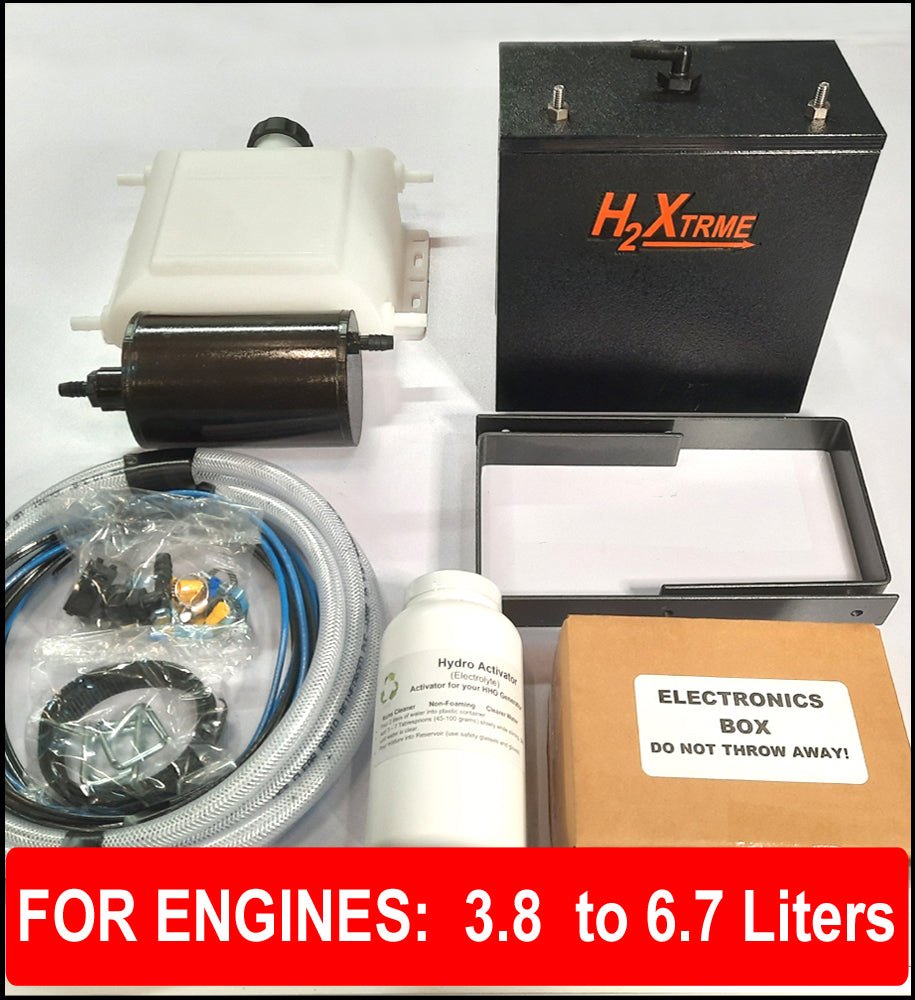
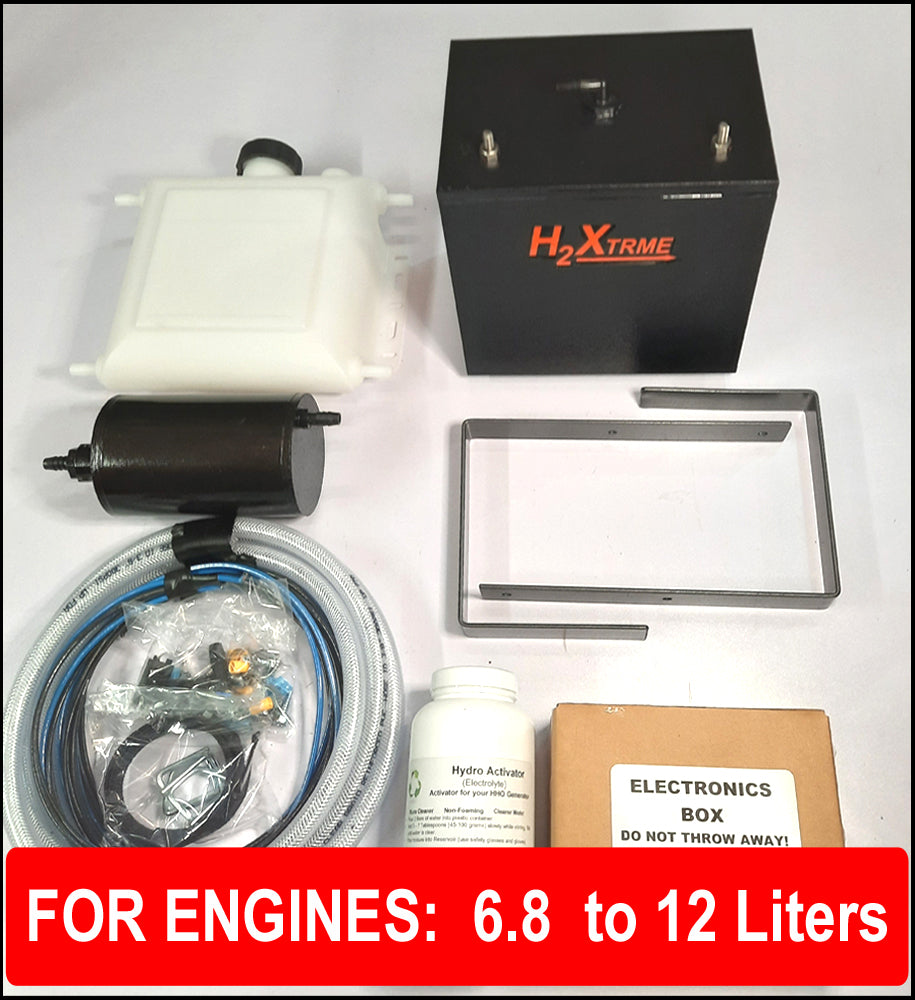
On the HHO side, our H2XTRME kits are sized by displacement rather than engine code, sidestepping most fitment problems: the small engine kit covers 1.1 to 3.7 liters at $597, the medium kit covers 3.8 to 6.7 liters at $747, and the large kit covers 6.8 to 12 liters at $897. Each ships with generator, reservoir, filter, hose, wire, mounting brackets, and hardware, and installation uses two electrical connections. Confirm actual displacement from the VIN or block stamp, not the marketing trim level.
| Kit Type | What It Changes | Typical Install Scope | Supporting Costs to Budget |
|---|---|---|---|
| Bolt-on intake/exhaust | Airflow in and out | Hand tools, no engine opening | Tuning, gaskets, hardware |
| ECU tuner | Fuel and timing tables | Plug-in or flash | Dyno time, scan tool |
| Cam and valvetrain | Valve timing and lift | Top-end disassembly | Springs, retainers, gaskets, tune |
| Stroker kit | Displacement and torque | Full short block build | Machine work, pistons, rods, balance |
| Full rebuild kit | Wear parts plus internals | Engine out | Machining, fasteners, assembly |
HHO Kit Prices by Engine Displacement
Advanced engine performance modification kits price out very differently by type, and the kit price is rarely the project price. A bolt-on package is a one-line purchase; an internal build is a stack of costs, and the stack is where budgets break.
Use these ranges as planning bands, not quotes. Prices vary by platform, brand, and region, and the labor line assumes a shop rate rather than DIY time.
A transparent budget covers the kit, machining, labor, tuning, and supporting systems. The forgotten lines are consistent across builds:
Watch out: a kit priced far below comparable kits for the same platform usually omits fasteners, gaskets, or machine work allowances. Compare line by line, not by headline price.
Total project cost is the number that matters, and staging keeps it visible. Budget supporting parts alongside the kit, because a fuel system that cannot keep up turns a good build into a lean-running engine.
For efficiency-focused owners, an HHO kit is a different kind of first step, and the tuner choice matters. Our EFIE/MAF advanced gas tuner at $175 works with fuel-injected gasoline vehicles, and our advanced diesel tuner at $175 covers electronically controlled diesels with a thermostat switch that prevents activation before the engine reaches temperature.
Emissions and warranty are the two risks buyers underestimate most. The SEMA guidance on federal regulation of aftermarket parts states it is illegal to market a product that fails an applicable Federal Motor Vehicle Safety Standard or takes a vehicle out of compliance. The California Air Resources Board rules on aftermarket parts require a part to be shown not to increase emissions before it receives an exemption from anti-tampering law.
Practical steps before you buy:
On HHO add-ons, buyers ask two fair questions: our article on whether HHO helps pass emissions covers what testing shows, and our breakdown of whether HHO kits damage engines covers failure modes. Watch out: installing any add-on that alters fuel trims without correcting the ECU can set codes and, in some cases, void coverage.
Reliability comes down to safety margins. A build tuned to the edge of detonation will not last. Leave fuel octane margin, keep oil temperature in range, and validate with a scan tool rather than by feel.
Staging keeps a build reliable and affordable: each stage is validated before the next begins. Here is the order we recommend.
Measure power gains consistently: same dyno, same correction factor, same ambient conditions. Wheel horsepower on a hot afternoon will not compare to a cool-morning pull.
For efficiency-focused owners, an HHO kit is a different kind of first step, and the tuner choice matters. Our EFIE/MAF advanced gas tuner at $175 works with fuel-injected gasoline vehicles, and our advanced diesel tuner at $175 covers electronically controlled diesels with a thermostat switch that prevents activation before the engine reaches temperature.
The hardest part of any build is not choosing parts. It is choosing the right first part for your engine, your budget, and your goals.
Contents depend on the kit type. A bolt-on kit typically ships with an intake, exhaust components, and a tuner. A rebuild kit includes pistons, rings, bearings, gaskets, and often a camshaft and valve springs. HHO kits from HHOKitsDirect include the generator, reservoir, filter, hose, wire, mounting brackets, and hardware, with tuner options for gas or diesel. Read the parts list before buying so you know what still needs to be sourced separately.
Cost tracks the parts involved. HHOKitsDirect HHO kits run $597 for 1.1 to 3.7 liter engines, $747 for 3.8 to 6.7 liters, and $897 for 6.8 to 12 liters. The EFIE/MAF gas tuner and advanced diesel tuner are $175 each and currently sold only with full kit purchases. Rebuild and stroker kits usually cost more because they include machined internals, plus you should budget for machine shop work and tuning.
They can, but the gain depends on the kit, the engine, and the tune. Intake, exhaust, and camshaft changes alter airflow and typically show up on a dyno, while rebuild kits restore compression you may have lost to wear. Measure wheel horsepower before and after on the same dyno with the same correction settings so the number means something. Results depend on the kit, the engine, and the tune.
A bolt-on kit installs without opening the engine: intake, exhaust, ignition, or a tuner. A rebuild kit replaces internal parts such as pistons, rings, bearings, and gaskets, so the engine comes apart and usually goes to a machine shop. Rebuild kits cost more and take longer but address wear and support higher cylinder pressure. Bolt-ons are the better first step for a healthy engine.
Many are, within limits. A mild intake or cat-back exhaust usually works on a stock engine, but a camshaft or stroker kit needs matching valve springs, fuel delivery, and engine management. Confirm engine displacement and configuration first. HHOKitsDirect sizes HHO kits by displacement, from 1.1 to 3.7 liters, 3.8 to 6.7 liters, and 6.8 to 12 liters, so the generator matches the engine rather than being guessed at.
Yes, on both counts. Emissions and safety rules govern aftermarket parts, so check the current requirements from official sources before you buy. Reliability depends on the tune and supporting parts; more power with a lean tune or stock fuel system shortens engine life.

Subscribe to our newsletter and always be the first to hear about what is happening.
© 2026 HHOKitsDirect.com
Designed by Out of the Sandbox. Powered by Shopify


Note and Disclaimer: Hydrogen or Hydroxy gas and hydrogen cells are experimental technologies, results vary depending on application success is not guaranteed.

Editorial Team
Author