
Last Updated: October 23, 2026
Quick Summary
A hydrogen fuel kit for boats is an on-demand system that uses engine electricity to split water into hydrogen and oxygen, then feeds that gas into the air intake to improve combustion. No compressed hydrogen, shore-side refueling or giant tanks are needed, because the gas is made as you run and burned immediately.
A hydrogen fuel kit for boats is an on-demand system that uses engine electricity to split water into hydrogen and oxygen, then feeds that gas into the air intake to improve combustion.
The appeal is straightforward: no compressed hydrogen, no shore-side refueling, no giant tanks. The gas is made as you run and burned immediately.
Below, we break down what these kits are, how they differ from fuel-cell propulsion, and which size fits your engine.
These are two completely different technologies, and the confusion costs buyers money. An HHO generator is an electrolyzer: it uses your engine's electrical system to crack water into hydrogen and oxygen and feeds the mix into the intake as a combustion catalyst. A marine fuel cell consumes stored hydrogen to produce electricity, with no combustion at all.
The distinction matters for cost, installation, and legality. HHO generators for boats are add-on efficiency devices; hydrogen fuel cells for boats are complete power systems requiring hydrogen storage, a fuel supply chain, and a much larger budget. One is a kit you install in an afternoon. The other is a marine engineering project.
Marine fuel cell power is a genuine engineering path to zero-emission navigation, and the hardware is substantial: a stack, hydrogen storage, thermal management, and integration with the vessel's electrical architecture.
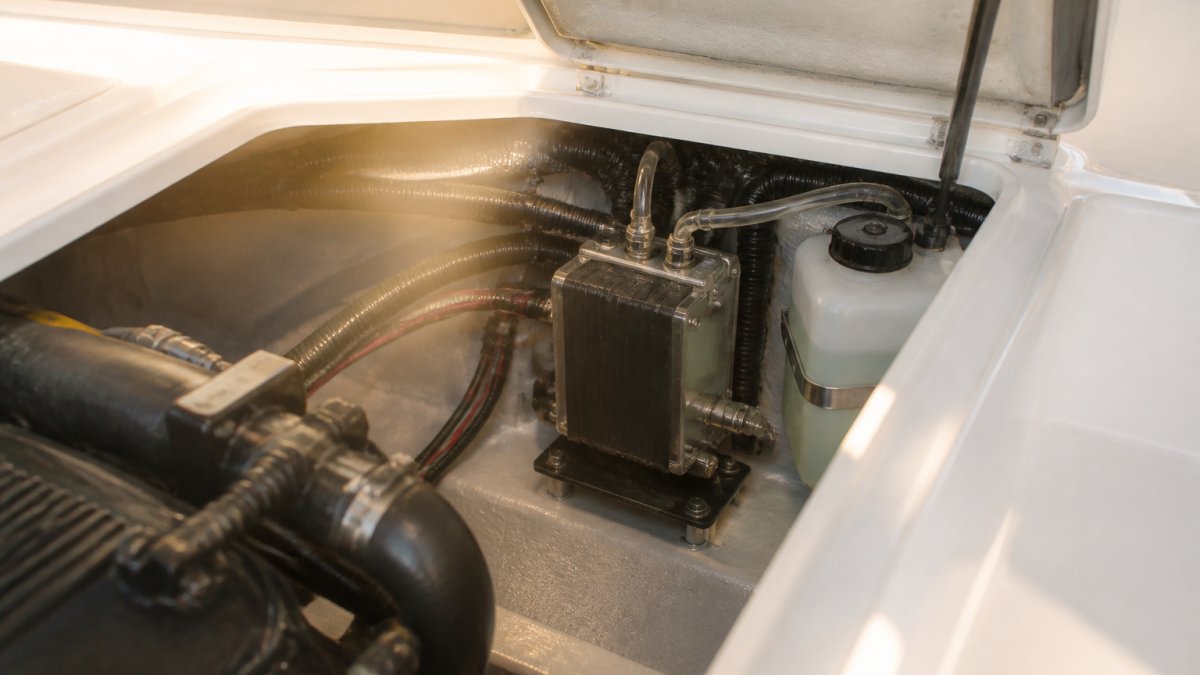
The efficiency case is real where it is deployed. A case study of hydrogen fuel cells used as an electric generator reported reductions of 37.4% in CO2, 32.5% in NOX, 37.3% in SOX, and 37.4% in particulate matter, according to the Journal of Marine Science and Engineering study.
Engine displacement decides which hydrogen fuel kit you need, and getting this wrong is the most common buying mistake we see. A unit built for a 3-liter engine will not deliver enough gas for a 10-liter block.
| Engine Range | Our Kit | Price | Generator Spec |
|---|---|---|---|
| 1.1 to 3.7 liters | H2XTRME 882 Small | $597 | 13 plates, 3.5" thick |
| 3.8 to 6.7 liters | H2XTRME 883 Medium | $747 | 19 plates, 4.5" thick |
| 6.8 to 12 liters | H2XTRME 884 Large | $897 | 25 plates, 6" thick |
| Commercial vessels | DUAL QUAD CORE | Contact for pricing | Two quad-core units |
Most recreational boats fall here. The H2XTRME 882 kit at $597 covers 1.1 to 3.7 liters, including most sterndrive and small inboard setups. Step up to the H2XTRME 883 at $747 for 3.8 to 6.7 liters.

Both use a chemically welded, permanently sealed container with no gaskets to fail, and installation needs only two electrical terminals and two hose connections.
Big blocks and working boats need more gas volume. The H2XTRME 884 at $897 handles 6.8 to 12 liters with a 25-plate generator. For commercial duty, our DUAL QUAD CORE system runs two quad-core generators on a welded steel frame with vibration isolators rated for 6G impact, a 100-amp smart controller, and four stages of filtration.


Hydrogen-powered boats exist, but almost none of them are retrofits. The California Energy Commission's Hydrogen Zero-Emission Tugboat Project team developed a design rated for up to 90 tons of bollard pull, per the project publication.
Consumer hardware is moving too. Yamaha introduced what it described as the marine market's first hydrogen-powered outboard concept in 2024, according to Yamaha Outboards. Concepts, though, are not products you can buy.
The realistic picture: fuel-cell vessels are commercial and experimental today. HHO kits are the accessible efficiency option for the boats already in the water.
Hydrogen boat fuel cost is the question every buyer asks, and the honest answer depends on which technology you mean. Fuel-cell vessels buy hydrogen at prices that vary wildly by region, and marina hydrogen availability in the United States is thin enough that most operators contract their own supply. An HHO kit does not buy hydrogen at all, it makes its own from distilled water and a small amount of electrolyte, drawing power from the alternator you already run.
The consumables are modest but not zero:
Rather than quote a savings percentage, work the math for your own boat. The formula is simple:
DUAL QUAD CORE Advanced Commercial HHO System For Trucks, Buses, Large Boats →
Annual fuel spend × realistic net savings rate = annual savings. Kit price ÷ annual savings = payback in seasons.
A worked example using round numbers:
Run the same math on a boat burning $600 per season at the same 10% net rate: $60 a year, and the same kit takes over twelve seasons to pay back. That is why high-hour commercial boats recover cost fastest while weekend boats take longer, neither outcome is a problem as long as you know which one you are.
For an HHO kit, fuel availability is a non-issue, distilled water is at any grocery store, and the electrolyte ships with the kit. For a fuel-cell vessel, availability is the binding constraint: marina hydrogen or methanol supply is limited, and total cost of ownership includes storage hardware, periodic inspection, and a fuel contract most recreational boaters never see. That is why the two categories serve different buyers, and why comparing a $747 HHO kit to a fuel-cell system on sticker price alone misses the point.
Onboard hydrogen generation is safe when the system is designed for it, and the key reason is that nothing is stored. Our generators produce gas on demand and feed it straight to the intake, no compressed cylinder, no accumulator, no pressurized vessel aboard.
That does not mean marine rules do not apply. They do, and buyers who skip this step get surprised at survey or insurance renewal.
The relevant ones for a hydrogen generator installation are:
Hydrogen is buoyant and disperses quickly in open air, which is a genuine safety advantage, but only if the compartment is ventilated. A sealed engine box with no airflow is the one installation we will not sign off on. Practical requirements:
Installation follows the same pattern as our vehicle kits: mount the generator and reservoir, connect two electrical terminals and two hoses, fill with distilled water and activator, and start the engine. A fully illustrated manual ships with every kit, plus email support if you get stuck.
The parts that trip people up are marine-specific: finding clearance for the reservoir and filter in a tight engine bay, running the DC feed through a proper fuse or breaker rather than directly off the battery post, and confirming the intake connection does not interfere with the flame arrestor or factory ventilation.
The hard part of buying a hydrogen fuel kit for boats is not installation. It is sorting real on-demand hydrogen systems from fuel-cell hype and from HHO listings that never tell you what size engine they fit.
At HHOKitsDirect, our H2XTRME generators use chemically welded, permanently sealed containers with no gaskets, install with two electrical terminals and two hose connections, and carry a limited lifetime warranty. Every kit ships with a fully illustrated manual and free tech support.
Read more here to understand this technology and pick the kit that matches your engine.
An HHO generator uses electricity from your engine to split water into hydrogen and oxygen gas on demand, then feeds that gas into the air intake as a combustion catalyst. Nothing is compressed or stored. A hydrogen fuel cell is a different machine: it combines stored hydrogen with oxygen to make electricity for propulsion or auxiliary power, and it needs a hydrogen supply chain plus tanks.
HHOKitsDirect reports a diesel bus demo that saw a 45% mileage increase with eight witnesses present. Treat those as the seller's own test figures rather than a guarantee for your hull, load, and throttle habits. The mechanism is combustion support: hydrogen and oxygen entering the intake help the fuel burn more completely. A kit sized correctly for your engine displacement matters more than anything else for whether you see a gain.
HHOKitsDirect prices the small H2XTRME kit (1.1 to 3.7 liters) at $597, the medium kit (3.8 to 6.7 liters) at $747, and the large kit (6.8 to 12 liters) at $897. The DUAL QUAD CORE commercial system for large boats, buses, and gensets is quoted on request. There is a lifetime warranty on H2XTRME generators.
On-demand HHO systems avoid the biggest risk of stored hydrogen because nothing is compressed or held in a tank; gas is produced as the engine runs and burned immediately. Installation still needs a dry, ventilated mounting spot away from ignition sources, secure hose routing, and a properly fused electrical connection.
Yes, though mostly as projects and concepts rather than showroom models. For recreational boaters, the practical option right now is an on-demand HHO kit that supplements your existing gasoline or diesel engine rather than replacing it.

Subscribe to our newsletter and always be the first to hear about what is happening.
© 2026 HHOKitsDirect.com
Designed by Out of the Sandbox. Powered by Shopify


Note and Disclaimer: Hydrogen or Hydroxy gas and hydrogen cells are experimental technologies, results vary depending on application success is not guaranteed.

Editorial Team
Author