
Last Updated: September 27, 2026
Search interest in an hhoplus alternative for cars keeps climbing because drivers want proven on-demand hydrogen technology without outdated generator designs. This guide from HHOKitsDirect compares what matters in a DIY hydrogen fuel system kit: plate count, sealed construction, tuner compatibility, and cost-per-mile math. The H2XTRME line is our fifth-generation answer to older HHOPlus-style units that rely on gaskets, bolts, and leak-prone housings.
A DIY hydrogen fuel system kit is a bolt-on electrolysis unit that splits distilled water into hydrogen and oxygen on demand, then feeds that gas into your engine's air intake as a combustion catalyst. Nothing is stored or compressed. Three things decide whether a kit lasts five years or five months: how the plates are held, how the container is sealed, and whether the electronics match your fuel system.
Plate count sets gas output. A 13-plate generator suits small engines, a 19-plate unit handles mid-size V6 and V8 blocks, and a 25-plate generator serves large-displacement trucks and RVs. More plates mean more surface area for electrolysis, which matters most on big engines.
Tuner choice is the step most buyers get wrong. Carbureted engines need no tuner. Fuel-injected gas engines built in 1987 or later need a gas tuner, the option most drivers select. Diesels with electronic control need a diesel tuner. For maximum results on fuel-injected gas, step up to the Pro Series tuner, which requires a scan gauge reader.
| Engine Type | Tuner Option | Who It's For |
|---|---|---|
| Carbureted (older cars) | No tuner | Pre-electronics engines |
| Gas, 1987+ fuel injection | Gas tuner | Most daily drivers |
| Diesel with electronic control | Diesel tuner | All modern diesels |
| Gas fuel injection, advanced tuning | Pro Series tuner | Drivers using a scan gauge |
| Existing HHO owners | Bare generator | Upgrading an older unit |
HHOKitsDirect builds three H2XTRME kits sized by displacement, so you buy the generator that matches your engine rather than a one-size-fits-all box. Each kit ships with the generator, reservoir, filter, hose, wire, mounting brackets, and hardware. Every generator carries a Limited Lifetime warranty.
The H2XTRME 882 HHO Generator Kit covers 4- to 6-cylinder cars and trucks from 1.1 to 3.7 liters. Its 13-plate generator measures 3.5 inches thick, 8 inches wide, and 7.75 inches high, and mounts with custom brackets. Internal electrical connections are welded at the factory, leaving only two terminals and two hose connections.

The H2XTRME 883 Kit serves large 6-cylinder and V8 engines up to 6.7 liters. Its 19-plate generator measures 4.5 inches thick with the same 8 by 7.75-inch footprint.

The H2XTRME 884 Kit is built for 8- to 10-cylinder engines from 6.8 to 12 liters, including trucks and RVs. Its 25-plate generator is 6 inches thick. For commercial fleets, buses, and diesel gensets, HHOKitsDirect also offers the Dual Quad Core commercial system, which pairs two quad-core generators with a 2.5-gallon reservoir, thermostatic cooling fan, and a 100-amp smart controller.

| Kit | Engine Range | Plates | Price |
|---|---|---|---|
| H2XTRME 882 | 1.1L - 3.7L | 13 | $597 |
| H2XTRME 883 | 3.8L - 6.7L | 19 | $747 |
| H2XTRME 884 | 6.8L - 12L | 25 | $897 |
| Dual Quad Core | Commercial diesel | 2x quad core | Contact for pricing |
HHO generator efficiency benefits show up in three places: fuel economy, exhaust emissions, and carbon buildup inside the combustion chamber. The hydrogen-oxygen gas enters the intake alongside air and fuel, then burns as a catalyst that helps gasoline or diesel combust more completely. Incomplete combustion is where unburned fuel, carbon deposits, and excess CO emissions come from.
A more complete burn means less wasted fuel per mile and cleaner exhaust. Drivers also report smoother throttle response and better acceleration because hydrogen speeds flame propagation across the cylinder. Over time, the cleaner burn helps strip existing carbon deposits from pistons, valves, and combustion chambers, which is why high-mileage engines often respond well to HHO kits.
Installation takes an afternoon for most DIYers, and the H2XTRME design cuts it further with only two electrical terminals and two hose connections. Mount the generator in the engine bay, route hoses to the reservoir and filter, wire the unit to a switched power source, fill with distilled water and activator, then start the engine and confirm gas flow.
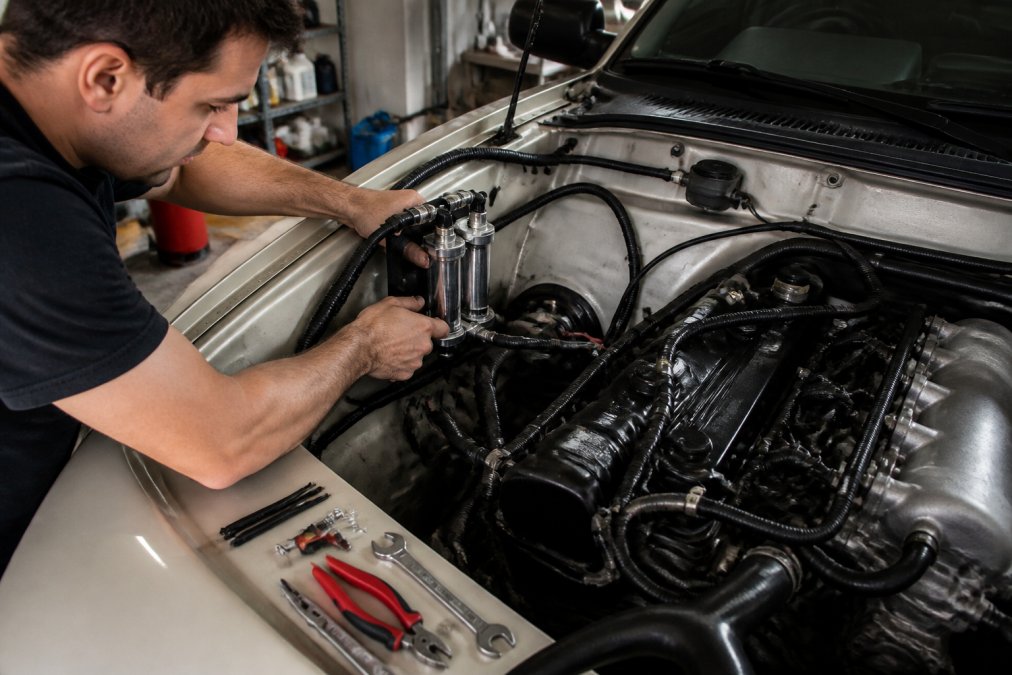
The sequence that works:
Payback math is simple: kit cost divided by monthly fuel savings equals months to break even. What most buyers get wrong is leaving out secondary costs. Build the number from four inputs: kit price, tuner price, consumables, and your current monthly fuel spend.
Using the H2XTRME lineup as the worked example:
| Line Item | 882 Kit | 883 Kit | 884 Kit |
|---|---|---|---|
| Generator kit | $597 | $747 | $897 |
| Gas tuner (fuel-injected, 1987+) | Required | Required | Required |
| Pro Series tuner (optional upgrade) | Requires scan gauge reader | Requires scan gauge reader | Requires scan gauge reader |
| Distilled water + activator | Ongoing consumable | Ongoing consumable | Ongoing consumable |
| Tuner-matched install time | One afternoon | One afternoon | One afternoon |
This is the question promotional pages skip. An on-demand HHO system does not replace oil changes, coolant flushes, or timing chain service, and it will not resurrect an engine with mechanical damage. What it changes is the deposit load inside the combustion chamber.
On-demand HHO generation is inherently safer than stored hydrogen because nothing is compressed or tanked. Gas is produced only while the engine runs and is consumed immediately in the intake stream. The H2XTRME container eliminates gaskets and exposed plate edges, removing the two most common leak paths on older designs. The remaining safety questions are the ones buyers lose sleep over: does this void my warranty, does it affect my insurance, and will it pass inspection?
Federal law matters here. The Magnuson-Moss Warranty Act prevents an automaker from voiding your entire warranty simply because an aftermarket part is installed. What an automaker can do is deny coverage for a specific failure if it can demonstrate the aftermarket part caused it. In practice, an HHO generator in the engine bay is unlikely to affect a claim on your transmission or suspension, but a claim on your ECU, oxygen sensors, catalytic converter, or engine internals could be scrutinized if the dealer argues the modification contributed.
Practical steps that protect you:
Standard auto policies do not typically require disclosing minor bolt-on modifications, but a modification that changes the vehicle's value, performance, or safety profile can matter at claim time. The safe pattern: notify your insurer in writing that an on-demand hydrogen generator is installed, describe it accurately, and ask whether it changes the premium or requires an endorsement.
Drivers who failed a recent inspection often ask whether an HHO generator helps them pass. A more complete burn reduces unburned hydrocarbons and carbon monoxide at the tailpipe, which is directionally helpful. But inspection programs vary widely by state, and some visual inspection protocols flag any under-hood modification regardless of tailpipe results. Verify your state's specific rules before relying on any add-on to pass a test.
Most HHO content online is promotional, making independent verification hard to find. Two filters help. First, look for test methodology: a credible fuel-economy claim states the baseline period, test period, driving conditions, and whether the same driver and route were used. Second, look for third-party standards language, SAE test procedures or independent lab results carry more weight than a single owner's tank-by-tank report.
| Concern | What to Know |
|---|---|
| Hydrogen storage | None; gas is made on demand and used instantly |
| Leak risk | Eliminated gaskets and sealed bolts reduce failure points |
| Warranty impact | Magnuson-Moss protects against blanket voiding; specific failures can still be denied if causation is shown |
| Insurance impact | Notify your carrier in writing; treatment varies by policy |
| Emissions testing | Cleaner burn helps, but state visual inspection rules vary |
| Independent verification | Demand methodology and standards references, not single-tank claims |
| Support | Free email tech support, phone follow-up available |
HHOKitsDirect's H2XTRME kits are designed to improve fuel mileage, based on its mileage results chart and customer reports. The hydrogen-oxygen gas acts as a combustion catalyst, helping gasoline or diesel burn more completely. Actual results vary by engine condition, driving habits, and how well the kit is tuned. High-mileage commuters and long-haul drivers typically see the clearest gains because they burn the most fuel per week, making even modest percentage improvements add up.
Start with plate count and container construction. HHOKitsDirect uses 13, 19, or 25 plates depending on engine size, and a chemically welded container that eliminates gaskets entirely, which removes the most common leak points. Check tuner compatibility too: gas tuner for fuel-injected cars 1987 and newer, diesel tuner for electronic diesels, or no tuner for carbureted engines. A Limited Lifetime warranty on the generator and a 30-day return policy on uninstalled kits are also worth requiring before you buy.
HHOKitsDirect kits install with two electrical terminals and two hose connections, and come with a fully illustrated manual you can download and print. Mount the generator using the included brackets, connect the hoses to the water reservoir, filter, and air intake, then add water and activator. Most of the internal electrical work is welded at the factory, so no soldering is required. If you get stuck, the company offers tech support by email with phone follow-up.
Aftermarket modifications can affect warranty coverage if a dealer can show the part caused a failure, so review your warranty terms before installing. HHOKitsDirect covers its H2XTRME generators with a limited lifetime warranty and offers a 30-day return on uninstalled kits. The system produces hydrogen on demand and stores nothing compressed, which the company notes makes it safe to run. If you are concerned about engine wear, start with a kit sized correctly for your engine displacement.
HHOKitsDirect states its kits lower engine emissions and clean carbon deposits from the engine, which can improve exhaust readings over time. The hydrogen-oxygen gas helps fuel burn more completely, lowering unburned hydrocarbons and carbon monoxide. That said, no kit guarantees a pass. If you failed a recent test, fix any existing check-engine faults first, run the HHO system for a few hundred miles to let decarbonization work, then retest. Keep your oxygen sensor and catalytic converter in good condition.
Finding an HHOPlus alternative for cars comes down to buying a generator designed for your engine size, not a generic box that fits nothing well. HHOKitsDirect builds the H2XTRME line around sealed, gasket-free containers, welded internal connections, and tuner options for carbureted, fuel-injected, and diesel engines. Read more here to understand this technology and see which kit matches your displacement, then get started with HHOKitsDirect and start cutting your fuel costs on your next tank.

Subscribe to our newsletter and always be the first to hear about what is happening.
© 2026 HHOKitsDirect.com
Designed by Out of the Sandbox. Powered by Shopify


Note and Disclaimer: Hydrogen or Hydroxy gas and hydrogen cells are experimental technologies, results vary depending on application success is not guaranteed.
Editorial Team
Author