
$ 597.00 $ 765.00
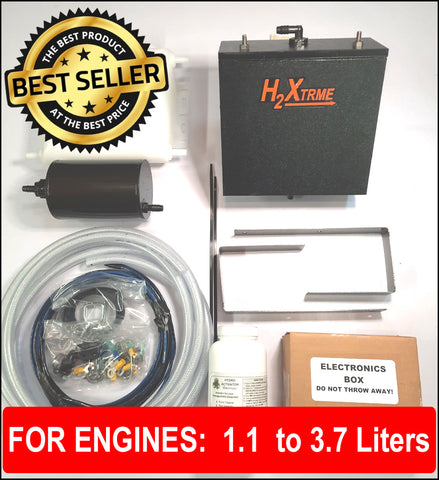
SMALL H2XTRME hho kit for all enginesranging from 1.1 liters TO 3.7 liters This BRAND NEW H2XTRME 882 HHO...
$ 747.00 $ 865.00
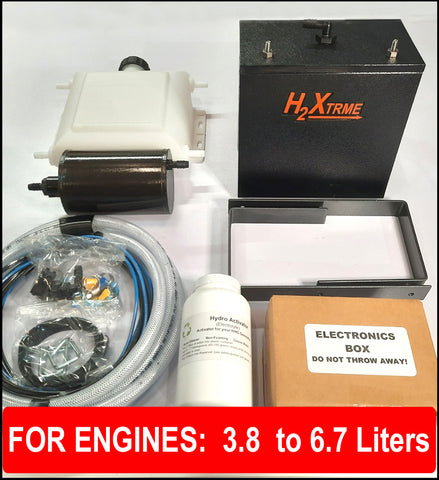
Medium size H2XTRME HHO KIT for all engine sizes:ranging from 3.8 LITERS TO 6.7 LITERS This BRAND NEW Medium...
$ 897.00 $ 1,035.00
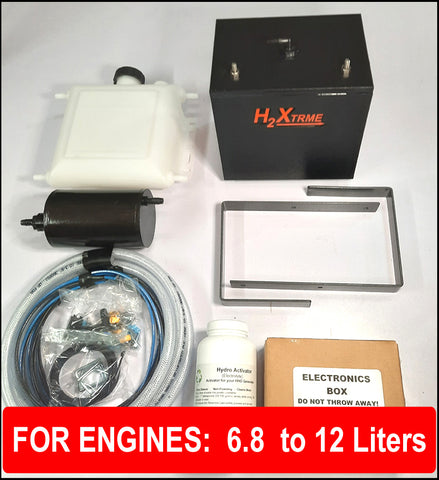
LARGE H2XTRME HHO KIT for all engine sizes:ranging from 6.8 LITERS TO 12.0 LITERS This BRAND NEW LARGE sized H2XTRME...
$ 3,995.00 $ 4,995.00
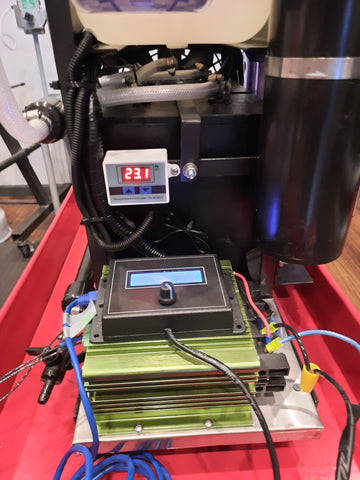
Our newest DUAL QUAD CORE commercial unit has been successfully tested in buses, trucks, on...
Can HHO HELP you? Is it really possible to get better mileage out of the same tank of gas using water? Can it Really drop emissions? You BET...read more here to understand this technology

Our new H2XTRME HHO kits are more advanced than any kit available anywhere in the world today.
COMPARE: Our fifth generation HHO kits (H2XTRME) are so unique that we have filed new patents to cover all the innovations. We have decided to set the bar even higher by introducing a series of generators that eliminate all gaskets, all stainless bolts and nuts, and many extra parts to eliminate any potential leak sources. All the complex internal structures hold everything in place while providing 30% more plate area, while doubling the flow rate giving you better results with our super efficient design.
The chemically welded container is permanently sealed like a heavy duty battery box with only two terminals, sealed with O-rings and military grade sealing nuts to prevent gas and fluid leaks. all the internal plates are held in alignment and spacing with micro-engineered retainers, eliminating gaskets entirely. Saving you maintenance!
We designed the new H2XTRME kits to be easier and faster to install - Saving you time! Now with only 2 electrical terminals to hookup (all other terminals are connected internally in our factory), and only 2 hose connections, eliminating manifolds, multiple hose clamps and potential leaks!
Our innovative internal plate retainers (patents pending) cover all exposed edges of the plates, while simultaneously allow even greater water and gas flow in between the plates for better production of HHO gas, saving you money!
The idea with this redesign was to take all we learned from the last breakthrough, and improve and innovate to make the kits lighter, easier to install, and faster to get up and running, so you can cut your fuel bill and start saving money fast!
We offer a Limited Lifetime warranty on all our new H2XTRME HHO generators!

All of our advanced HHO Kits include the fully assembled H2XTRME Generator; an ultra slim reservoir, dry filter, controller electronics (40 amp PWM, relay, digital amp gauge, auto resetting fuse), wires, hoses, connectors, mounting brackets, and a starter bottle of electrolyte. Everything needed to install, setup, and run the kit on your vehicle.
 "I Purchased an HHO Kit from you back in March 2011, installed it into a 1988 Holden Commodore with a V6 3.8 litre GM motor...I replaced the standard spark plugs for "Brisk Premium" plugs... running sweet since. Averaged around 6 to 7 litres per 100 km down from around 15. The price of fuel (92 octane) yesterday was $1.53 per litre. Do the math!"
 "We just completed our first test on the H2 Hummer. We are proud to report that our first test is complete and we ran 567 miles and we got 19.6 MPG exactly (up from 7-9 mpg). We are unaware of any H2 getting better MPG. No failures and no warning lights. Woo Hoo. We'll test more and keep you posted." - Rick
 " Hi Bob,just returned from my trip to Calgary and area.I did 1548.55 miles and used 42.1 gallons of gas,in my reckoning I got 36.78 mpg (up from 22 mpg). I am very happy with the result.As you know most of the trip was in the mountains climbing over 6000 feet at one point,even had the a/c on for part of the trip....Talk later- Roger Taylor"
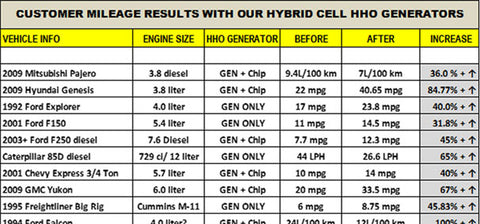
If you research competitors sites, all you will see are a few generic or poorly detailed testimonials. We decided that the industry needed more comprehensive details so we asked our customers that emailed us, to verify and clarify. This chart is compiled from their information to us. To see the whole chart, Click Here:
I recently had someone email me that had purchased our 8 day course (we sell as an illustrated booklet for those that are in a hurry to make a decision). He asked this question: "How does your system "tune"? I plan on purchasing your kit with tuner, but don't understand what I am tuning." That's a great question. I figured others might have the same one, so this is how I answered it: The “tuners” we provide, don't directly affect the flow of fuel, we rely on the massive work of the engineers who programmed the engines with specific fuel maps, based on the engines needs, to do that. All engines with computers (ECM's) use sensors to gather data and...
This is probably one of the most asked questions here and around the world right now. People are looking for anyway to cut their gas bill down so they don't have to choose between going to work, or paying their bills. Out here in northern California (east of San Francisco/Bay Area), gas is again over $6.00 a gallon. It costs over $100 for me to fill my Toyota Tundra when it gets below a 1/4 of a tank. I hate it...That's why I have been working 12 hour days, 6 days a week since April, developing, engineering, prototyping, patenting, and manufacturing a new line of HHO generators. We have crammed a year and a half development into just 6 months,...
It's taken many late hours and every weekend, to cram 18 months of product development and engineering, prototyping, patent applications, into just 6 months. But we are now manufacturing and sending out kits with newer cutting edge technology. We have a backlog of faithful customers who are already starting to receive their kits, and we are assembling and sending out more every week now. Check out the new innovations! We are excited to set the bar once again, even higher and do what no one else has attempted in this industry with our fifth generation hho kits. More information to come as we update the website and catch up on blog posts and questions! Bob
Our HHO kits are designed so anyone can install them. You do not have to be a mechanic or electrician either. Our fully illustrated manuals clearly explain the process for everyone and we offer free tech support if you need help. The HHO kit hardware is straightforward for every car or truck: Install the 3 components (Generator, Reservoir, and filter); connect them with provided hoses and clamps, and connect the wiring (also included). At that point you are ready to fill up and run your kit. However, If your car has fuel injection (most cars newer than 1999), you need to install a gas or diesel tuner so that the car computer knows to lean out the fuel when HHO...
The amount of money saved by burning your fuel more efficiently using the on- demand hydrogen-oxygen our kits inject, is determined by a couple of factors: 1) How big is your engine? Let's say you are getting 15 miles per gallon now, You could get 23 mpg with our kit (a 53% increase). I did that with my Chevy Trailblazer. Instead of filling up every 4 days, you could go 6 or 7 days on the same tank. Instead of filling up 7 times a month, now you fill up just 4 times, for example. You could save 3 tanks of gas every month! Smaller engines would do even better.3 Tanks of gas = 3 x 15 gallons x $5.00 per...
That's a good question. Normal HHO systems get pretty hot because of the amount of amperage they use trying to produce enough HHO gas to affect their mileage. Most older systems are similar. Once they get hot, some of the product produced is HHO gas, but some is actually steam. Because of that- the water is used up quickly and needs to be refilled every few days. Part of the reason this happens is that every system out there (except ours), has exposed edges in every plate. If they are a dry cell with compressed neoprene gaskets, they still have holes in every plate to allow the water to pass from one cell to the next. every hole is an...
Subscribe to our newsletter and always be the first to hear about what is happening.
© 2024 HHOKitsDirect.com
Designed by Out of the Sandbox. Powered by Shopify


Note and Disclaimer: Hydrogen or Hydroxy gas and hydrogen cells are experimental technologies, results vary depending on application success is not guaranteed.