
Last Updated: October 28, 2026
Quick Summary
An HHO hydrogen generator is an on-demand electrolysis device that splits distilled water into hydrogen and oxygen gas and feeds it into your engine's air intake. Our H2XTRME kits include a generator, reservoir, filter, hose, wire, mounting brackets, and hardware, and installation is a half-day job for a handy owner. The peer-reviewed evidence for onboard HHO kits in cars is thin, so run a controlled three-tank MPG test rather than trusting a sales sheet.
An HHO hydrogen generator is an on-demand electrolysis device that splits distilled water into hydrogen and oxygen gas and feeds it into your engine's air intake. At HHOKitsDirect, our systems use H2XTRME technology as a combustion catalyst.
The product listings describe HHO generator kits that include a generator, reservoir, filter, and hose.
On a high-mileage engine with carbon deposits, that faster burn is also pitched as a way to clean out buildup over time. Plausible in principle, but not yet proven in a controlled, vehicle-level test.
Here's the part most sellers skip: the peer-reviewed evidence for onboard HHO kits in cars is thin. The most-cited study in this space, published in the Journal of Marine Science and Engineering case study, measured a hydrogen fuel-cell electric generator, not a vehicle-mounted electrolyzer. It reported emissions reductions in the range of roughly one-third across CO2, NOx, SOx, and particulates. That's a stationary generator running on fuel-cell technology, not an HHO kit bolted to your fender.
Broader hydrogen market forecasts, including Market Research Future's hydrogen generator market outlook, describe a growing industry. None of that growth data measures fuel savings in a high-mileage vehicle.
A typical high-mileage pickup alternator is rated around 130-220 amps, and a small HHO cell often draws 10-30 amps continuously. At 14 volts, 20 amps is roughly 280 watts, and the alternator converts engine torque to electricity well below 100 percent efficiency. Most practitioners find the round-trip energy from gasoline to alternator to electrolysis to hydrogen gas is a small fraction of the energy in the fuel burned to make it, which is why a controlled test, not a sales sheet, is the only honest arbiter.
Ask three questions before buying: How many amps does the cell draw at cruising RPM? What is the rated gas output in liters per minute? And what is the alternator's spare capacity after the vehicle's baseline electrical load? If the seller can't answer all three, you can't evaluate the energy balance. ::: Balancing these electrical demands is a critical step for anyone attempting to improve vehicle fuel economy through supplemental hydrogen injection.
A real test takes discipline:
To make the result defensible:
The H2XTRME kits are listed for different engine-displacement ranges.
| Engine Displacement | Plate Count | Generator Thickness | Typical Application |
|---|---|---|---|
| 1.1L - 3.7L | 13 plates | 3.5" | 4-6 cylinder cars, small trucks |
| 3.8L - 6.7L | 19 plates | 4.5" | Large 6-cylinder, V8 up to 6.7L |
| 6.8L - 12.0L | 25 plates | 6" | V8, V10, RV, heavy truck |
Our H2XTRME generators use a welded, sealed container design that eliminates gaskets.
If you're unsure which cell fits your engine, our guide on how to know the right size HHO generator for your car walks through the measurement.
Installation is a half-day job for a handy owner. Mount the generator where it gets airflow and stays clear of exhaust heat, usually the inner fender or a bracket near the battery. Keep the reservoir above the cell so gas and water flow correctly, and route hoses away from belts and pulleys.
NEW! H2XTRME HHO KIT - for SMALL size engines from 1.1 liters to 3.7 liters →
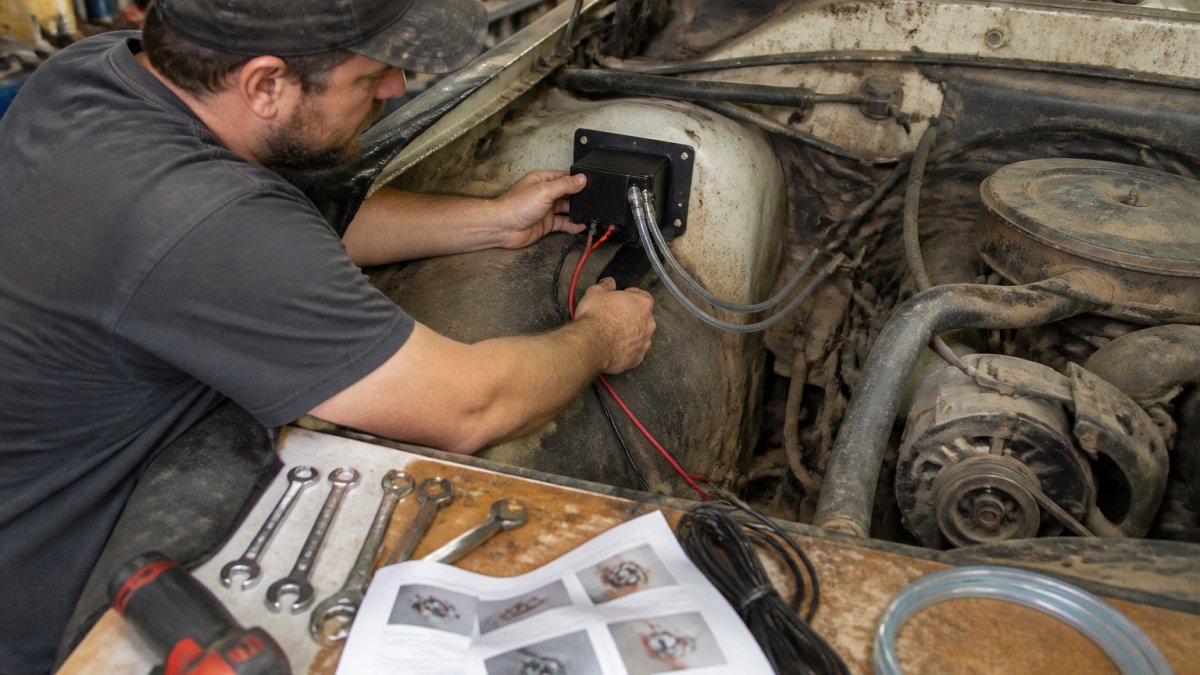
The product listing says to add water and activator when installing the kit.
The product listings describe two electrical connections and tuner options for carbureted engines, fuel-injected gas cars, and electronically controlled diesels.
For a deeper schedule, our HHO generator maintenance guide covers fluid intervals and filter changes in detail.
Our small-engine kit is $597, the medium kit is $747, and the large kit is $897. To see whether a kit pays for itself, use our HHO payback period and ROI calculator to run your own numbers.
The fuller picture has four parts: physical safety, vehicle warranty, emissions and inspection compliance, and insurance.
The H2XTRME generators have a Limited Lifetime warranty.
More importantly, federal law prohibits tampering with emissions control systems, and many states run inspection programs that check for modified or missing emissions hardware. Adding a device that feeds gas into the intake can, depending on how it is installed and how the inspector reads it, create a compliance question. Check your state's inspection rules before you install, and do not remove or disable any factory emissions component to make room for a kit.
Older engines are more sensitive to intake changes, not less. Adding hydrogen-oxygen gas can shift the oxygen sensor reading, which shifts fuel trims and can trigger a check-engine light on a fuel-injected engine if the tuner is wrong or missing. On a high-mileage engine with a tired catalytic converter or lazy oxygen sensor, the margin for error is smaller, which is why the tuner match matters as much as cell size, and why a scan-tool reading of fuel trims before and after install is worth ten minutes.
Our H2XTRME line uses 5th-generation generator technology, a welded, sealed container design that eliminates gaskets, and a Limited Lifetime warranty on the generator. The kits include a generator, reservoir, filter, hose, wire, mounting brackets, and hardware. You can browse the full HHO generator product lineup to pick the kit that fits your engine.
The product listings say to install using the illustrated manual, add water and activator, and start the engine.
A smaller H2XTRME kit is $597 and the medium kit is $747.
HHOKitsDirect describes its H2XTRME systems as a combustion catalyst. The supplied facts do not establish fuel-mileage results.
H2XTRME generators use a welded, sealed container design that eliminates gaskets.
Multiply your monthly fuel spend by the MPG improvement you actually measure, not the one advertised. If you spend $400 a month on gas and a verified 10% gain saves $40, a $597 kit takes about 15 months to break even. At a 5% gain the payback stretches past two years. Factor in electrolyte, distilled water, and any tuner upgrade, and remember the alternator works harder to power the cell, which can offset part of the savings.
Adding a hydrogen generator to a high-mileage vehicle is a decision worth testing, not trusting. Measure your own baseline, size the cell to your engine, and hold the kit to the same standard you'd hold any fuel-saving claim. At HHOKitsDirect, our H2XTRME kits give you a sealed, gasket-free generator, a simplified two-terminal install, and a Limited Lifetime warranty so you can run that test with confidence. Get started with HHOKitsDirect and put your own numbers on the road.

Subscribe to our newsletter and always be the first to hear about what is happening.
© 2026 HHOKitsDirect.com
Designed by Out of the Sandbox. Powered by Shopify


Note and Disclaimer: Hydrogen or Hydroxy gas and hydrogen cells are experimental technologies, results vary depending on application success is not guaranteed.

Editorial Team
Author