
Quick Summary
The core hho generator components are the electrolyzer cell with its plate stack, the electrolyte, the water reservoir and dryer filter, the power control parts such as relays, breakers and PWM controllers, and the wiring. Each part supports electrolysis by supplying water, a conducting electrolyte, and controlled power, so every component must be matched to your alternator and wiring.
What an HHO Generator Does and Why Components Matter
HHOKitsDirect built its reputation on a simple idea: a well-matched set of hho generator components makes an HHO generator perform better than a random pile of parts. An HHO generator uses electrolysis to split water into hydrogen and oxygen gas, which many enthusiasts add to an engine's air intake. The science is still debated, so the article focuses on what each part does and how to choose it well.
Electrolysis needs three things to work: water, an electrolyte to carry current, and a power source. Each of the seven components below supports one of those needs. Get any one of them wrong and output falls, or the system overheats or trips its breaker.
Research on this topic is still limited. A 2025 study of an oxyhydrogen generator design published in Sustainability reported a multi-cell layout, but it did not test performance across different vehicles. Treat any claimed fuel gains as unverified until you measure them on your own vehicle.
The electrolyzer cell is where the splitting happens, and its geometry sets the ceiling on everything downstream. Plates act as electrodes, and their count, spacing, and surface area determine how much current the cell can carry before it overheats or the electrolyte boils. A 2025 design evaluation of an oxyhydrogen generator describes a reported build with 3 cells, 4 electrodes and 15 neutral plates. That is one documented design, not a universal requirement, but it illustrates the pattern most builders follow.
How the plate stack is wired. A cell is built from alternating positive and negative electrodes separated by neutral plates. The positive and negative plates connect to the power supply; the neutral plates between them are not wired to anything. They sit in the electric field and split the total voltage across more gaps, which lowers the voltage per gap and reduces heat.
Plate spacing and surface area. Tight spacing lowers resistance and raises current, but it also makes it harder for gas bubbles to escape and for electrolyte to circulate. Most practitioners find a gap in the 1/8-inch to 1/4-inch range is a workable compromise for a 12-volt system. Surface area matters too: a larger plate carries more current at the same voltage, so a small plate stack paired with a 40-amp breaker will simply run hot. Size the plate area to the current you intend to draw, not the other way around.
Plate material trade-offs. 304 stainless steel is common in kit designs because it resists corrosion better than plain steel and is cheaper than 316. 316 stainless resists chloride attack better, which matters if your tap water carries chlorides. Plain steel and aluminum are poor choices: they pit quickly, shed material into the electrolyte, and change the current path as they degrade.
Cell count versus cell size. You can raise output by adding cells in parallel (more current at the same voltage) or by adding plates in series within one cell (more voltage per cell, less current). Parallel cells share the load and run cooler per cell but need more electrolyte volume and more gas-handling capacity. Series plates within one cell are simpler to build but concentrate heat in a single housing.
Pure water conducts electricity very poorly, so the cell draws almost no current without an electrolyte. Our HHO Generator Hydro Activator (Electrolyte) is a 16-ounce product priced at $23.95, and we include a bottle with every H2XTRME HHO kit we sell.
Concentration is a balancing act. Browse the HHO Generator Hydro Activator electrolyte to get the right solution for your system. Too little electrolyte and output drops. Too much and the cell pulls excess current and can trip protection. Start with the amount in the listing, then adjust based on what your system does.

Gas handling protects the engine and the generator. The New HHO Dryer Filter and Container, priced at $69.95, is 6 inches long and 3.5 inches in diameter. It mounts above the reservoir so water vapor drains back when the generator is off, which saves water. It includes a 20-to-1 micron filter.
The New Ultra Slim HHO Reservoir, priced at $49.95, measures 9 inches high and 3 inches thick, with molded hose barbs for 3/8-inch hoses. Plastic elbow fittings at $3.75, a 4-into-1 plastic manifold at $10.95, and 304 stainless steel hose clamps (20-pack, $26.95) are available for your hose connections.
Power control does two jobs: it protects the wiring from a runaway current draw, and it lets you tune gas output without changing electrolyte concentration. Get the sizing wrong and you either nuisance-trip the breaker or melt a wire before the breaker ever sees the fault. A properly sized controller and protected wiring matter just as much when balancing loads across off-grid power systems, where every amp has to be accounted for.
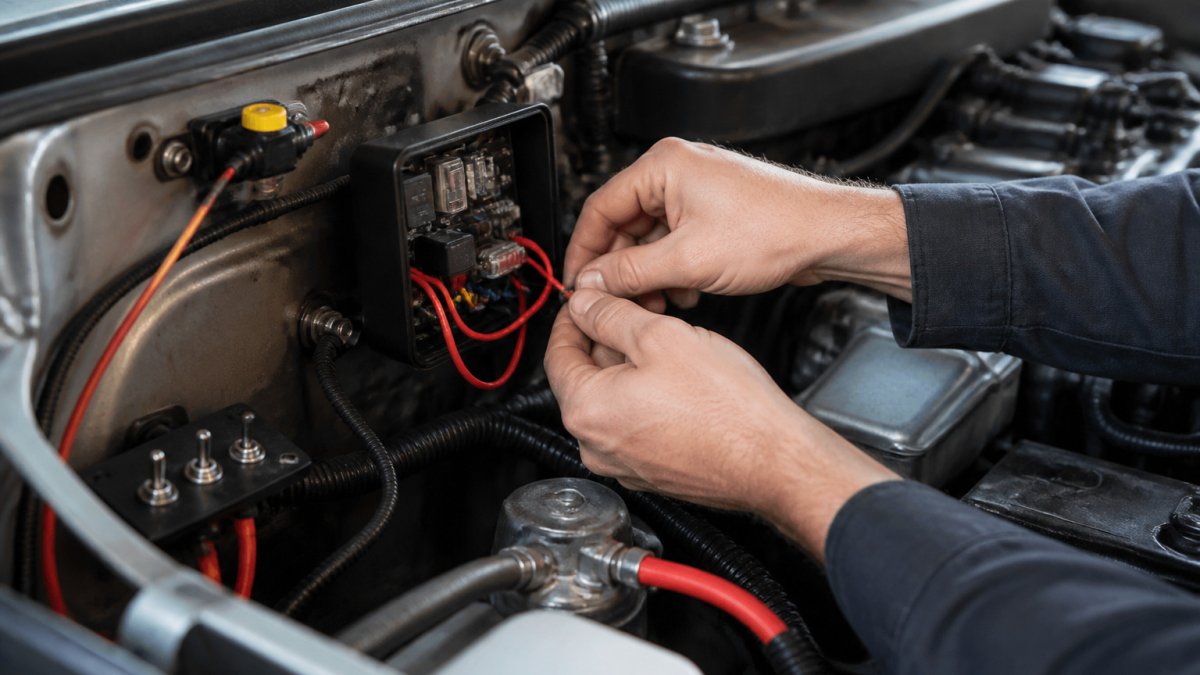
Start with the current draw. A 12-volt HHO cell drawing 20 amps consumes 240 watts; at 40 amps it consumes 480 watts. That current has to come from the alternator, so check the alternator's spare capacity before you size anything else. A common pattern is to keep the generator's draw under about 20 to 25 percent of the alternator's rated output so the battery still charges at idle.
Wire gauge follows current and run length. For a 40-amp circuit at 12 volts, most practitioners use 8 AWG copper for runs under about 10 feet and 6 AWG for longer runs, because voltage drop over a long run wastes power and heats the wire. Undersized wire is the most common cause of a generator that works on the bench and fails in the engine bay. Watch out: a wire that is warm to the touch after 10 minutes is undersized, even if the breaker has not tripped.
HHO Generator Hydro Activator (Electrolyte) →
Relay sizing. Size the relay above your expected continuous current, not at it. The Heavy Duty 70 Amp Relay for HHO kits, priced at $39.95, is rated for continuous duty and is the same relay included in our complete kits. A relay rated at exactly your draw will run hot and its contacts will pit over time.

Breaker and fuse selection. A 40 Amp auto-resetting breaker at $29.95 cuts power if the generator draws too much current, then resets itself once it cools. Auto-resetting breakers are convenient but they hide a fault: if the breaker resets and the fault is still present, it will trip again and cycle. A manual-reset breaker or a fuse forces you to find the problem.

How PWM actually regulates output. A 40 Amp PWM power controller at $69.00 lets you dial in current precisely by pulsing the power on and off at high frequency. The cell sees an average voltage lower than battery voltage, so current falls and gas output falls with it. The advantage over adding or removing electrolyte is that you can tune output from the dash without opening the cell.
Switching and shutdown. Our ON/OFF Switch with Power LED, priced at $7.95, gives you a manual shutoff. Wire it to control the relay coil, not the main current path, and place it where you can reach it from the driver's seat. A generator that keeps running after the engine stops will drain the battery and continue producing gas into a closed intake.
Diagnosing trips. A breaker that trips repeatedly usually means too much electrolyte or too little water. Add water or reduce current with a PWM controller before you raise the breaker rating. Raising the breaker to stop nuisance trips is the single most common way builders melt a wire.
The table below summarises the key power-control specs and prices the article gives for each part.
| Item | Value | Note |
|---|---|---|
| Heavy Duty Relay | $39.95 | Rated for continuous duty |
| 40 Amp Auto-Resetting Breaker | $29.95 | Resets itself after cooling |
| 40 Amp PWM Power Controller | $69.00 | Tunes output without opening the cell |
| ON/OFF Switch with Power LED | $7.95 | Controls relay coil, not main current |
| Alternator draw limit | 20-25% of rating | Keeps battery charging at idle |
| Breaker sizing | ~125% of continuous current | Confirm wire rated for it |
| 40 A wire, short run | 8 AWG copper | Under about 10 feet |
| 40 A wire, long run | 6 AWG copper | Longer runs |
Match parts to your engine's needs rather than buying the largest option. Gasoline cars, diesel trucks and boats each have different intake layouts and electrical systems. Check the generator's rated current against your alternator and wiring before you install.
Diesel engines in particular need careful evaluation. A 2020 experimental study of HHO gas added to idling automotive engines examined idle-speed effects but did not report a diesel-specific sample size, so do not assume results carry over.
Buying individual components gives you control, but you must confirm that each part's current rating, hose size and fitting type match the others. Mismatched fittings or undersized relays are the most common reasons a homemade build underperforms.
Individual parts suit experienced builders who want to upgrade a single component, such as swapping in the PWM controller.
Start by choosing a complete kit or listing the parts you need, then check each hho generator components rating against your vehicle's electrical system. Read the DIY HHO Kit Installation Guide: Step-by-Step Setup before you wire anything.
A typical HHO generator system has three main parts: the HHO generator itself, a gas separator or bubbler unit, and an electronic control unit. The generator holds the electrolyzer cell plates that split water into hydrogen and oxygen gas. The separator helps manage the gas before it reaches the engine, and the control unit regulates current to the cells. The reservoir, filter, relays and breakers round out a complete kit. Understanding each part makes it easier to troubleshoot and to choose parts that fit your engine and wiring setup.
HHO cells commonly use stainless steel plates separated by gaskets or plate retainers, filled with an electrolyte solution. HHOKitsDirect's H2XTRME design uses internal plate retainers that eliminate gaskets and a chemically welded, permanently sealed container. Stainless steel resists corrosion in the electrolyte, while the electrolyte itself, such as the sodium hydroxide activator sold with our kits, allows current to flow through the water. Plain water alone conducts too poorly to produce useful gas output.
Key safety components include an automatic resetting breaker rated for the generator's current draw, a relay rated above the actual load so its contacts are not burned out, and an on/off switch for manual shutdown. A PWM controller helps keep current within safe limits. Use stainless steel hose clamps and properly sized fittings to prevent gas leaks, and route the system so it shuts off automatically with the engine. Check every connection regularly and follow the manufacturer's installation manual.
Efficiency depends on cell design, plate count, electrolyte concentration and how precisely current is controlled, rather than on one fixed configuration. Published designs have used multi-cell layouts such as a 3-cell generator with 4 electrodes and 15 neutral plates, though this is a reported specification and not a universal requirement. A PWM controller lets you tune current to find the best setting for a given engine. Verified mileage data from your own testing matters more than any single design claim.
Ready to build your setup? Explore the HHOKitsDirect catalog to find a complete kit or individual parts sized for your vehicle, backed by a 30-day return policy and a five-year warranty on our generators.

Subscribe to our newsletter and always be the first to hear about what is happening.
© 2026 HHOKitsDirect.com
Designed by Out of the Sandbox. Powered by Shopify


Note and Disclaimer: Hydrogen or Hydroxy gas and hydrogen cells are experimental technologies, results vary depending on application success is not guaranteed.

Editorial Team
Author